
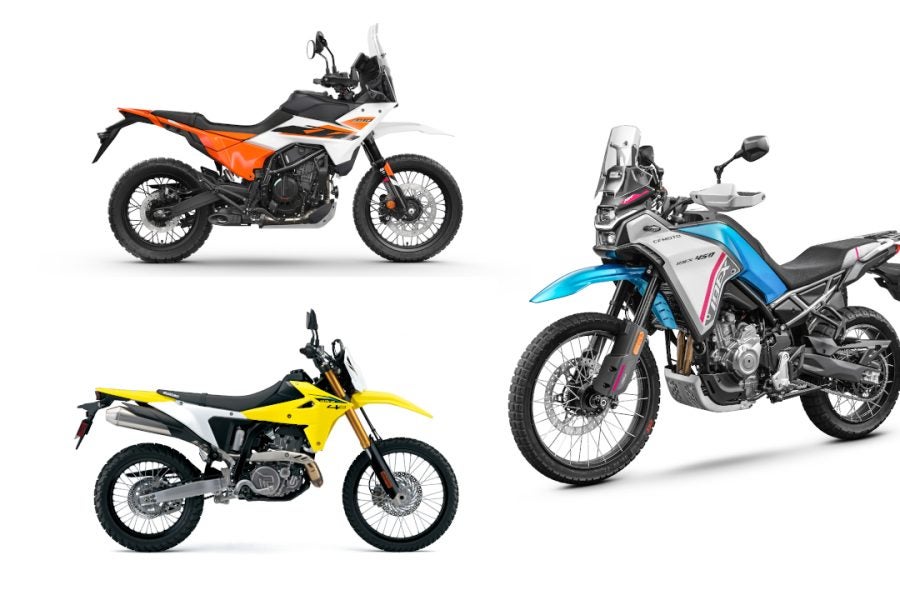
Remember two years ago, when the only 400 ADV dual sports on the market were the antiquated Suzuki DR-Z400 and the street-oriented KTM 390 Adventure? The times they are a-changin’, and in 2025, we have three new choices in this segment; the Suzuki DR-Z4S from Japan, the KTM 390 Adventure R from India and the CFMOTO 450 Ibex from China. Which one would you pick? Let’s take a look at the specs, in case you’re having trouble deciding. But first, a quick overview:
CFMOTO 450 Ibex: First seen in 2023, came to US market in 2024. Packs most of the features of a full-sized ADV into a small parallel twin-powered machine.
Suzuki DR-Z4S: Announced in late 2024 as a replacement for the long-running DR-Z400S. It sees significant updates over the old bike, and is a true dual sport, aimed more at trail-riding than long-distance travel or street comfort. It is included in this list because the Dizzer has long been used as a travel bike for BDRs, etc., and it’s also included in this list because many people will be considering it against the other two, even if it’s not exactly analogous.
KTM 390 Adventure R: Released in winter of 2025 as an updated take on the company’s made-in-India small-bore adventure bike lineup. Also has most of the features of a full-sized ADV. Comes with 21-inch front wheel and 18-inch rear, where previous 390 models only had a 19-17 wheelset from the factory. Long-travel suspension to match, and ergonomics improved for off-roading. Note that there’s also a new KTM 390 Enduro R model with many of the same parts, and that machine would be a stricter 1-to-1 comparo to the Suzuki, as it’s a dual sport. There’s also a KTM 390 Adventure X, which is similar to the R but with wimpier suspension and 19-17 wheels on cast rims.
And now let’s get down to business:
Engine
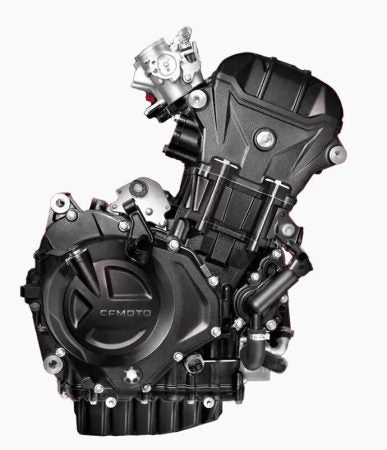
CFMOTO’s made-in-China engine is rumored to be the 500 twin project that KTM abandoned. Photo: Adventure Motorcycle
The CFMOTO 450 Ibex is the only parallel twin here, making a claimed 44 horsepower at 8,500 rpm, and 32.5 pound-feet of torque at 6,250 rpm. It is rumored this made-in-China engine is actually the much-awaited parallel twin 500 design that KTM promised a few years back, then pulled the plug on. That is a very likely proposition, considering CFMOTO is part-owner of KTM and manufacturers bikes for them in China. This engine comes with a six-speed gearbox and slipper clutch; a quickshifter kit is available through Healtech, but you will have to install it and tune it yourself.
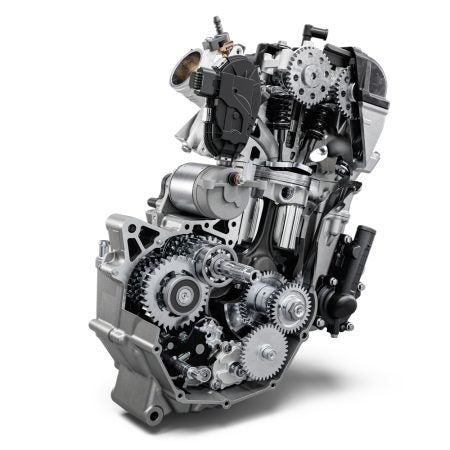
KTM’s 390 engine continues to evolve, with more capacity but still the same output. Of course, KTM says the torque curve is improved, with more power at lower RPM. Photo: KTM
KTM’s 390 engine is now a 399cc single, updated significantly in 2024. It makes the same muscle as the previous 373cc engine: 44 horsepower at 8,500 rpm, and 28 pound-feet of torque at 7,000 rpm. A six-speed transmission comes standard with this model as well, and throttle-by-wire allows KTM to include a quickshifter. Alas, it will cost you extra money, but it does transform this bike’s performance on a back road, allowing you to maintain momentum on upshifts. And while single-cylinders always have a reputation for vibration, it must be said that previous 390 models seemed to control that nicely; the trade-off was a weird exhaust note that Lowdown Show host Neil Graham describes as sounding like a sump pump. He’s not wrong, but if you wear ear plugs, you won’t notice.
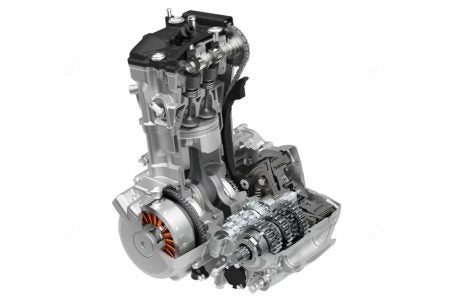
Suzuki’s DR-Z4S engine looks similar to the previous model at first, but a greatly-modified top end should make it feel different, even if there’s no horsepower hike. Photo: Suzuki
As for the DR-Z4S: The new engine is obviously heavily inspired by Suzuki’s previous single-cylinder 400, and that can be good or bad, depending how you look at it. It’s still a five-speed, which was the number one complaint about the previous engine, although Suzuki says they’ve optimized the gearbox. Perhaps some trickery with the ratios will reduce vibration; there’s nothing inherently wrong with a five-speed if it’s done right, so we aren’t going to castigate Suzuki until we’ve ridden this ourselves (at this point, no journo has ridden the bike). The new throttle-by-wire and EFI systems are a definite improvement on this bike; along with a new piston and changes to the intake and exhaust systems, Suzuki says this single is supposed to run more smoothly than the previous DR-Z, which was its real problem, not the five-speed. Max output is down to 37.5 horsepower at 8,000 rpm and max torque is 27 pound-feet at 6,500 rpm. That’s the real shame here—it appears that power has dropped a bit from the previous model, although that’s not entirely clear. This could be tied to staying A2-legal in Europe.
To stay in the learner-friendly A2 category, bikes must have a certain power-to-weight ratio, so lighter bikes are also down on power. By the way, the A2 rules are also why the 390 and 450 are at the 44 horsepower mark; there’s more power to be found in those engines, but then they would be harder to sell, not easier. Yes, we think that’s stupid, but it’s the law.
Which one’s the winner? It depends what you want. The Ibex looks really appealing, with more torque and in theory a smoother-running twin compared to a rattly single. Some might question its Chinese construction, but on paper at least, it looks the best-suited for loaded-down trips at higher speeds. That extra torque is very useful on the highway. But both the KTM and Suzook singles are more refined than the old carbureted lumps; the KTM has a quickshifter and is a lot of fun on a back road as a result. The DR-Z might be the lowest-powered machine here, but it carries with it Suzuki’s reputation for practically-bulletproof engines; indeed, the previous DR-Z engine might have been one of the sturdiest singles ever made. That’s very important if you’re on a long journey far away from dealerships, where power matters less than reliability. So maybe rank it this way: A three-way tie, with the CFMOTO the best bike for higher speeds, the KTM the most fun on a back road, and the Suzuki the best choice for BDRs or longer trips away from civilization.
Suspension
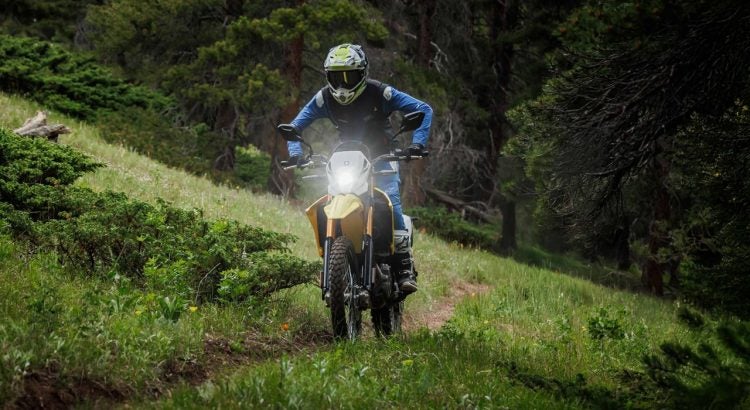
All three bikes have marketing featuring all sorts of off-road heroics, but the Suzuki is the machine most clearly aimed at the true, traditional dual sport market. We only include it on this list because so many riders buy these to convert them to travel bikes. Photo: Suzuki
All these machines have suspension that’s better than what was common only a short time ago. Starting with the CFMOTO 450 Ibex, you get a KYB fork with adjustable preload, compression and rebound; the shock is also a KYB production, with adjustable rebound and damping. There’s 7.9 inches of travel front and rear. While that sounds good on paper, opinions differ; some riders think it’s too stiff, but when Ryan rode it for MO, he seemed to think it worked well. YMMV.
The DR-Z4S also has KYB suspension with 11 inches of suspension travel up front and 11.6 inches in the back. Suzuki says the fork is adjustable and the rear is fully-adjustable; sifting through all the information out there, what we find is that front and rear are adjustable for compression and rebound damping, while the rear is also preload-adjustable. A similar setup to the Ibex, then, although with more travel and probably a different spring rate.
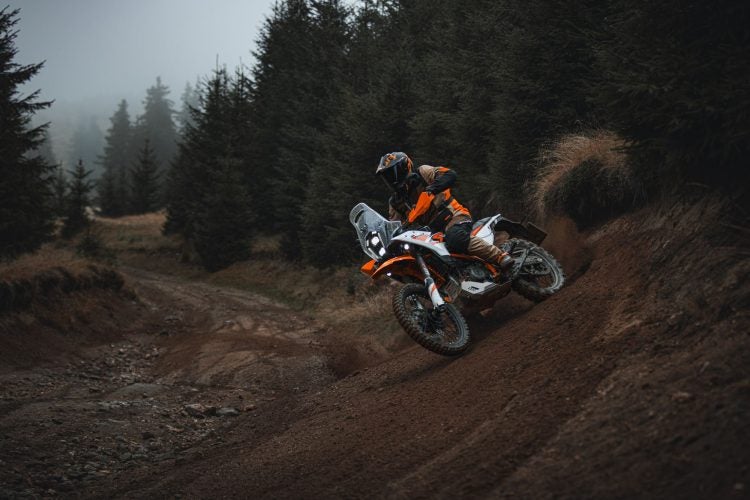
KTM put significant work into upgrading the 390’s offroadability in the R model. The previous machine was a popular mount for smaller riders, but there were some common complaints over the ergos, and the wheelset wasn’t suited for true dirt riding. The new machine is supposed to solve those issues. Photo: KTM
The KTM 390 Adventure R comes with WP APEX suspension with an open-cartridge fork and a split-piston shock setup. There’s 9 inches of travel front and rear, with fine compression and rebound adjustability in the fork as well as rebound and preload adjustability in back.
Which one is the winner? No journo has ridden the DR-Z4S or the latest KTM 390 Adventure R, so it’s all just spec sheet guessing. Over the past few years, the 390 series certainly had suspension well-matched to its usage; it remains to be seen whether the more offroad-oriented 390 ADV has suspension that will hold up, but given KTM/WP’s long history here, not to mention the added travel, we’d guess it’s going to perform better than the CFMOTO. As for the Suzuki, Japanese bikes are not typically known for excellent out-of-the-box suspension, but with the new 400 seeming to come into the market as more of a premium model, we’d like to try it before passing judgement. To a certain extent, suspension quality is a subjective choice anyway. The Suzook has nearly 3 inches more travel than the KTM and nearly 4 inches more than the CFMOTO, so if you want to do some tweaking of spring rates and maybe tinker with the shim stacks, it might have the most potential of them all, if you want to seriously bash around off-road. But then, that’s hardly surprising as it is a true dual sport unlike the other two.
Electronics
All these bikes have switchable ABS and traction control, as well as multiple ride modes aimed at safety systems’ interference for off-roading. The 390 is the only one with a quickshifter and cruise control included from the factory (at extra cost), and the Suzuki is the only one without a TFT dash. That’s not a huge downside for many riders, but LCD dashes are often trickier to navigate than a TFT, and bikes that are cheaper than the Dizzer come with TFT, so why didn’t Suzuki include one? The obvious answer is price, but as we will see in a minute, the Suzuki is not exactly trading on bang-for-buck here.
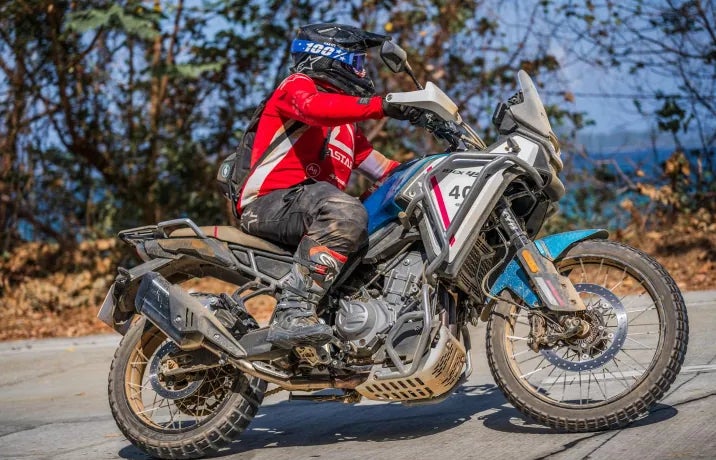
Ryan Adams from MO tests the CFMOTO 450 Ibex in the Philippines. Without a ride-by-wire throttle, this machine is inherently limited, but unless you want a bidirectional quickshifter, most riders won’t notice. It still comes with ride modes, switchable ABS and TC, all the stuff that most riders *really* want. Photo: Motorcycle.com
KTM definitely has the edge in the electronics department; even if it does cost extra, at least you have that option to upgrade. Realistically, aside from the quickshifter and cruise control (which can make a very big difference indeed), most riders will probably find little difference between the bikes’ electronics once they’ve become accustomed to the interface. This is not to say there aren’t going to be differences, but that most riders will adapt to them quickly, and it’s not like any of these bikes require complicated electronics to master them anyway. We’re dealing with light machines well under 50 horsepower, maybe the easiest-to-ride bikes on the market.
Ergonomics
A subjective question, mostly, but two things are undeniable: The DR-Z4S has the least bodywork to hide behind, and the tallest seat—judging from past Suzuki efforts, probably the least comfortable seat as well. You’d expect that, because it’s a dual sport, and has the most suspension travel of all the bikes here. Some riders might not fancy the Suzuki’s 36.2-inch seat height; in that case, they can opt for the KTM 390 Adventure R at 34.2 inches, or the CFMOTO 450 Ibex at 31.5-32.3 inches (it’s adjustable). This is one advantage of the CFMOTO’s short-pants suspension; it makes it much easier for riders with less inseam to climb aboard. And while many riders don’t think this is a big deal, it’s a major factor for others. The Ibex also has a one-hand adjustable windshield, while the KTM’s windscreen does not appear to be adjustable outside perhaps a two-position unbolt-and-reattach arrangement (this was the case on previous 390s).
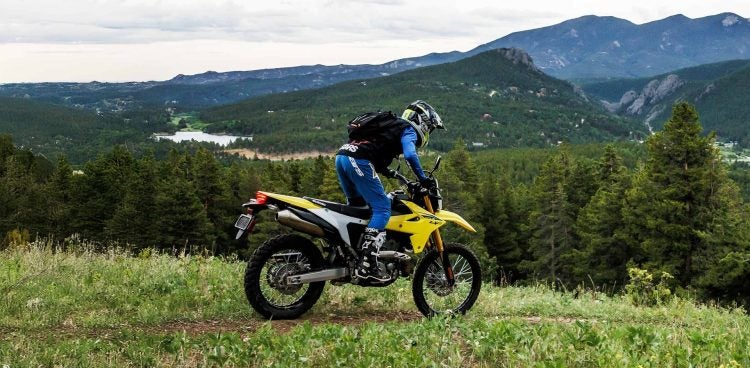
The DR-Z4S has ergonomics far more in line with a traditional dirt bike than the other two machines, as it is a true dual sport. Photo: Suzuki
Most riders go into an ADV bike purchase expecting to change up the seat, screen and bars over time, except for KLR owners, perhaps. The CFMOTO and KTM machines here may become the next KLRs, bought with little intention to upgrade, but most Suzuki owners will throw parts at their bike eventually, to improve the comfort.
Fuel range
Fuel range depends how hard you’re riding, so any of these machines could be a gas pig if you’re abusing the throttle. But as far as tank capacity goes, the KTM 390 Adventure R has 14-liter capacity, the CFMOTO Ibex 450 has 17.5-liter capacity and the Suzuki DR-Z4S has only 8.7-liter capacity.
That means the Suzuki has the lowest range here, by far. This is in keeping with the previous DR-Z400 as well as Suzuki’s DR650; they’ve never been keen on putting large tanks on these bikes from the factory, probably because they want to keep them trimmed-down for off-roading. However, it’s also worth noting that 14-liter and 15-liter aftermarket tanks were readily available for the previous Dizzer, and if you wanted to wait for a Safari tank, you could go as high as 17 liters. No doubt similar options will be available in the future, while it’s unlikely the other bikes in this comparo will get expanded options. This is not to say the Suzuki is better, just that if you’re willing to spend the money, this can be sorted out.
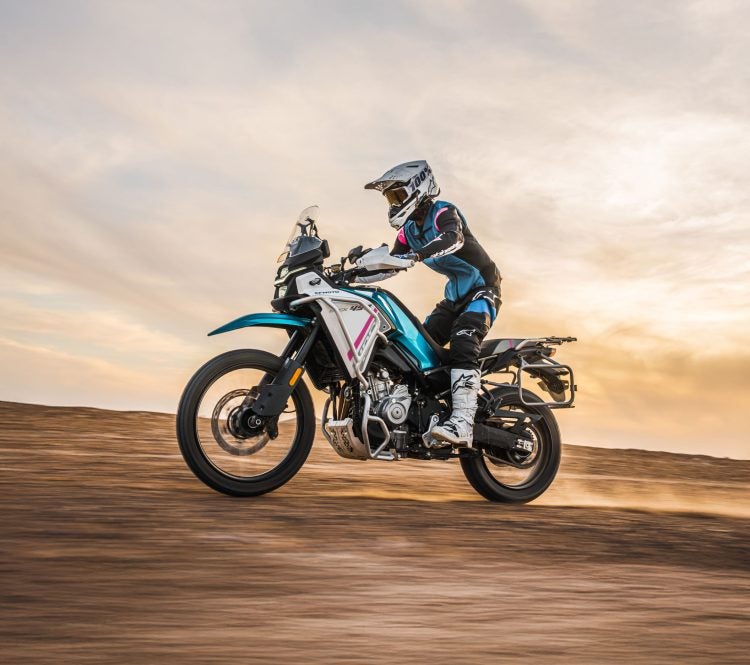
If you want to do longer miles with minimal downtime refuelling, the Ibex 450’s larger tank should make a big difference. Photo: CFMOTO
All things being equal, the Ibex should have the most range of all these machines in stock form.
Weight
As you’d expect, the slim, trim DR-Z4S is the lightest bike here, at 333 pounds wet. The KTM weighs 364 pounds wet, and the Ibex 450 is a chunky monkey at 419 pounds wet.
Add a new seat, more fuel capacity and a windscreen, etc., to that Suzuki, and it will be pretty close to the KTM. But it would be harder to take enough parts off that KTM to get it down to the Suzuki’s weight. As for the Ibex, the penalty for that twin-cylinder engine is really noticeable here.
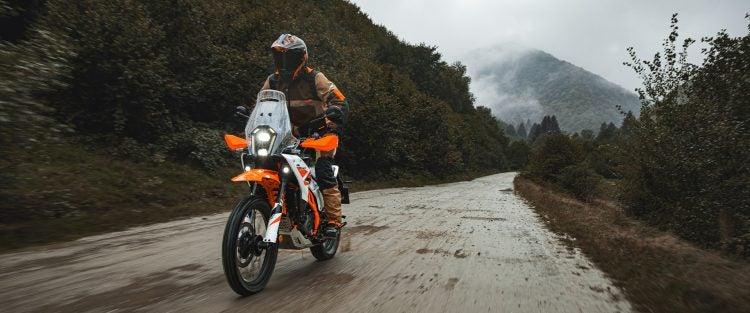
Bodywork on all three machines is new, as all three bikes are new models. The KTM gets a significant overhaul from its previous look, and so far, I haven’t heard any riders complaining about the look, while the previous aesthetic was certainly polarizing. Photo: KTM
Price
The real bottom line is this: CFMOTO Ibex 450 pricing starts at $7,999 MSRP in the US for 2025, before taxes and fees; that price includes a five-year warranty. The KTM 390 Adventure R comes with a two-year warranty and sees pricing start at $6,999 USD before taxes and fees (and the quickshifter, etc., will cost you extra too). The Suzuki DR-Z4S has introductory pricing of $8,999, with a 12-month warranty.
Those are very significant differences in the warranties; kudos to CFMOTO for their half-decade warranty as standard. The Suzuki’s shorter warranty may be redeemed by the fact that most riders are unlikely to need its help, if the new DR-Z4S has the same reliability as the preceding 400 model.
Summary
As always, what you buy really comes down to what you want to do. The CFMOTO really looks hard to beat as far as a street-travel bike option, with off-roading at a pace behind the other two. The KTM 390 Adventure nicely splits the difference and offers amazing value for money right now; the Suzuki is more expensive, with less power and a more bare-bones approach, but it’s really a rugged dual sport, not a true ADV. If you want to do harder miles over longer distances, most riders would end up investing more money into creature comforts on the bike that’s already the priciest option.
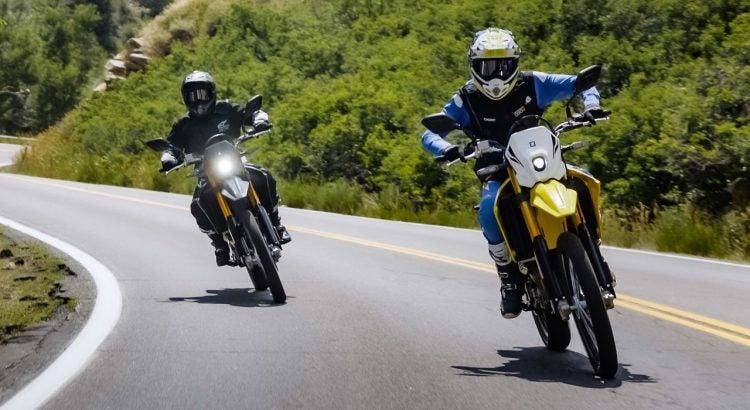
The Suzuki comes with the highest price tag, but the shortest warranty. However, Suzuki’s reputation is that you are unlikely to need much dealership help. Photo: Suzuki
All three bikes are new-ish on the market, so it’s really hard to fairly compare them until we’ve had a chance to observe their reliability. However, this is one place where Suzuki’s reputation surpasses the other two, with made-in-Japan machines that typically last a very long time if properly maintained, and with minimal hard-to-track-down problems. It’s a lot more money, but you typically get good quality for that money when you buy Suzuki. But instead of pulling overtime to make those extra payments, you could be putting money into your Alaska travel fund if you were on the KTM or even the CFMOTO. Consider all these factors before buying, and if possible, get a test ride on each—back-to-back, if possible (at an event like DirtDaze or some other rally, where there’s a wide range of bikes to demo). Know the specs going into that test, but the seat time will really tell you what bike is for you. If you fall in love with a machine, you can fix any of the potential downsides, or just learn to live with them—there’s much more to a bike than just the spec sheet!