
I remember talking with some other moto-insider once who posited that every motorcyclist, ever, has always customized their bike to some extent. “Not so,” I said. “I never customized my old Kawasaki KZ440.” … and then I sheepishly admitted I’d replaced the handlebars and done some other tinkering.
The truth is, when people get their first motorcycle, they inevitably start throwing money at it. New bodywork, heated grips, luggage, whatever—the urge to customize your bike for function, performance and aesthetics is just part of the motorcycle experience. And yet, I am a firm believer that many riders are missing out on the greatest improvement of all—improving themselves.
Living out in the rear end of North America’s northeast, I rarely have the chance to do quality rider training, but I am always grateful when that opportunity comes my way. It’s fun to practice and perfect old skills; it’s even better when you learn new skills. Last year’s trip to the Traction eRag’s XTADV skills camp stands out as some of the most enjoyable time I’ve ever spent on a motorcycle, and not only was it a fun week, but the skills learned will stay with me as long as I keep my practice up. At some point, I need to get back out there for the Level 2 clinic, to practice my dirt bike wheelies, log punches and other skills.
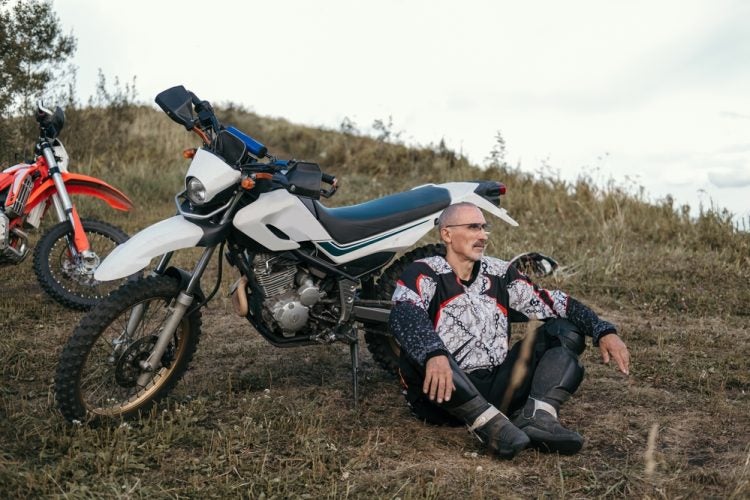
Older riders as well as young will benefit from advanced training. Photo: AnnaTamila/Shutterstock.com
When that week was over, Riley Harlton (of the Awesome Players YouTube channel) said in a YouTube video that he was humbled by the experience, despite years of practicing his skills with his friends, and that he was inspired to make seeking ongoing raining a yearly priority going forward. I felt the same, and it makes sense. As Dallas said often during the drills, not only will the skills you learn help you appreciate riding more, they may save your life.
That’s a point worth mentioning, emphasizing, because one of the most common themes I see in the general headlines related to motorcycling is: “Middle-Aged Or Elderly Rider Dies In Crash.” Decades ago, the stereotype was that a young kid would get a screaming high-horsepower machine and rev his way to Kingdom Come. In the past few years, it’s mostly older riders who are dying instead.
There are several reasons for this. Statistically speaking, there are more older riders than younger riders. The younger riders today wear more, and better, gear than they used to (indeed, the older riders dying now are often from the same generation that saw so many younger riders die years ago, partially thanks to a lack of good gear, and you’ve certainly got to suspect a correlation).
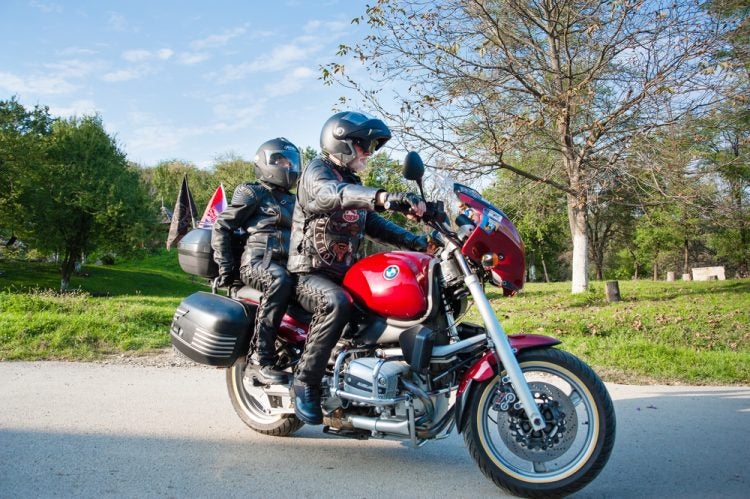
Buying a big bike, overloading it, and then pushing that machine beyond the rider’s limits is a recipe for trouble at any age, but especially as a rider’s motor skills deteriorate. Photo: maRRitch/Shutterstock.com
But one of the biggest reasons that older riders die is that their skills decline as they age—and in some cases, due to the different standard for acquiring a motorcycle license in the past, some of those riders may have never had the needed skills to begin with. For riders in this position, added or advanced training makes a lot of sense. And that’s why, over in Europe, we see organizations like the UK’s Motorcycle Industry Association (MCIA), the European Association of Motorcycle Manufacturers (ACEM), and Federation Internationale de Motocyclisme (FIM) pushing training over there. On April 15, the ACEM and FIM launched a campaign pushing this message; the Learn–Ride–Enjoy–Repeat program is intended to get riders interested in improving themselves, and their skills.
This is good. But what won’t be good is, if advanced training starts to be required. Especially if that training gets expensive.
The reality is that Europe and North America’s roads are filled with an aging population whose skills are deteriorating. Every once in a while, when you hear of some blue-haired 80-year-old running over a cyclist, or even when you get stuck behind one in traffic, the grumbling about requiring testing for elderly motorists gains some momentum.
I think this might not be a terrible idea. While I am loath to introduce any more nanny-state safety provisions into the rulebooks, the idea of requiring a no-cost road test to prove you’re capable of not running over other people (in the case of a car driver) or running off the road yourself (in the case of a motorcyclist) is not completely out of line. On public roads, the existence of a licensing system implies some responsibility on the part of the state to make sure motorists are not a danger to others. A road test to keep your motorcycle license would probably deter some riders from staying in the game, or perhaps from re-entering, though.
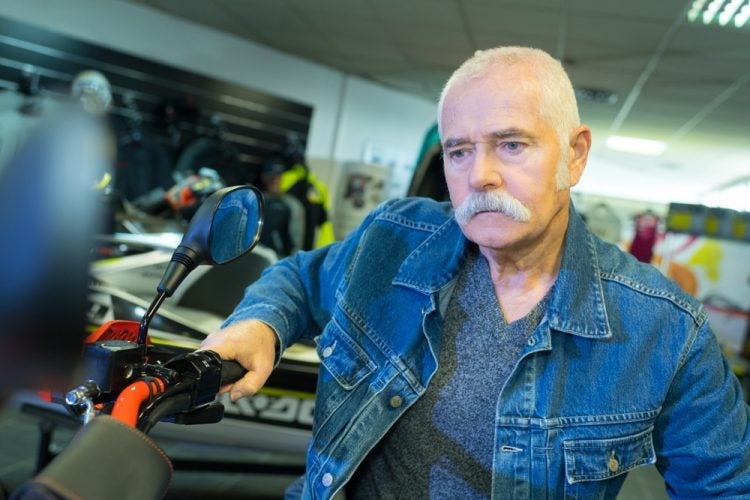
Requiring a semi-regular road test would probably deter some older motorcyclists from re-entering the two-wheeled life, but following that with mandatory advanced training would be a much tougher pill to swallow. Photo: ALPA PROD/Shutterstock.com
But what would be a bad idea is, if older riders faced mandatory advanced training at high cost. It would almost certainly drive a large percentage of motorcyclists away.
When I look at the current crop of young riders in my area, I see the cost of the mandatory training in my region does hold a lot of people back from getting their motorcycle license. However, if they’re keen enough, they will eventually follow through on their dreams and do their course. But that’s just the start of the expense; high insurance rates, the cost of good gear, not to mention the ever-increasing price tag of a reliable and fun motorcycle, is hard for the young rider to handle. All through that, though, they’re told their costs will drop as they get older.
But if those costs start to pick up again, it’s easy to imagine a lot of riders getting very disenchanted with the two-wheeled life, and instead going to buy the Miata/Charger/Wrangler of their dreams.
So like I said, the push towards voluntary advanced training is good, but the industry needs to very carefully weigh the risk-reward of making training mandatory. In an age where—gasp!—moto non-profits may be staffed by non-riders, motorcyclists and the powersports industry need to start keeping a careful eye on the ideas put forward by the organizations that represent them. A good idea can turn into a bad idea, if it becomes mandatory and expensive.
Trail Break runs on the first Monday of every month, unless Zac forgets about it, or gets worked up about something in the days in-between scheduled columns.