
There are all kinds of ways for Americans do the ADV travel thing. Some riders never leave the lower 48 states, and the reality is, if you get an enduro bike, you could spend a lifetime risking your life around the continent. If you believe adventure motorcycling must have an aspect of mortal danger to be considered legit, you can get that without ever needing a passport—see here and here for examples.
To the north, Canada and Alaska offer thousands of miles of lonely gravel roads, big skies and massive wildlife. To the south, Mexico has its own offerings from single-track trails to unpaved roads to empty desert dunes and coastal beach riding—not to mention the intrigue of a culture and language different from the States. But nearby to Mexico, there’s another option that has become more open in recent years. If you can figure out how to ride Cuba, you’ll have an experience that will be far different from life at home.
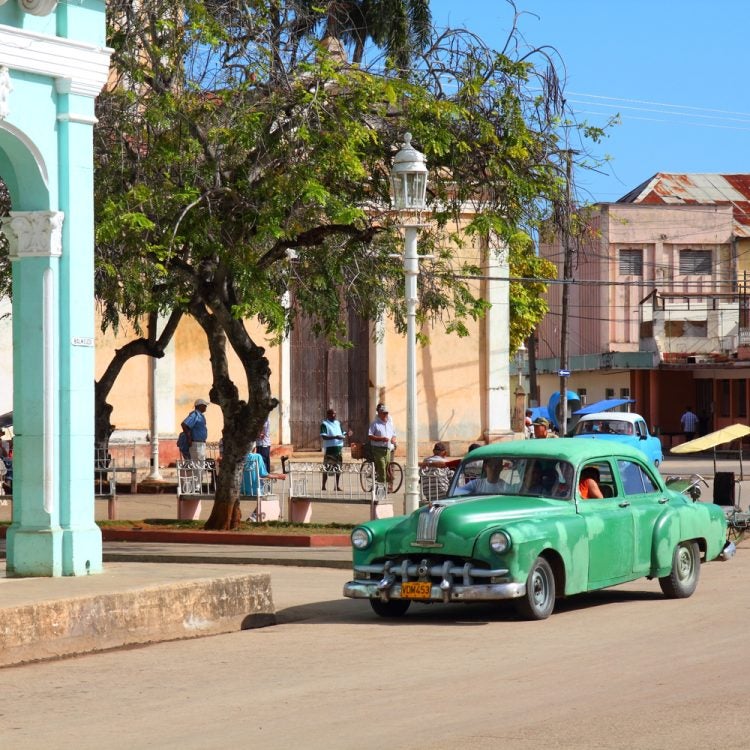
While you do see more modern cars, particularly around tourist areas, vintage autos are kept on the road with baling wire and prayer and continue to move many Cubans around day-to-day. Photo: Ivana Casanova/Shutterstock.com
Generally speaking, Cuba is under a trade embargo by the US government, and that historically made travel there difficult for Americans. However, determined US-based travelers can still visit there through one of several legally-prescribed loopholes; see the feds’ explanation of those rules here. Some Americans simply travel to Mexico or Central America and use air or sea travel to reach Cuba from there. I am not recommending this, as the US government says that “Travel to Cuba for tourist activities remains prohibited by statute.” I do know US residents who have done this, and they didn’t get locked up. YMMV, but a scrap with the feds is something I don’t want, and I doubt you want it either.

Decayed, crumbling industrial infrastructure is everywhere in Cuba. Some of it is still operational, some isn’t, but at least it provides a local watchman with work, keeping scrap thieves at bay. Photo: action sports/Shutterstock.com
Where should you go, if you get to Cuba on your own, and not with an organized outing like Exit Tours? Over the years, there have been various rental opportunities if you want an ADV bike or Harley-Davidson. From my observation, a low-slung cruiser would be a terrible idea on Cuba’s potholed roads, so if you’re going to rent a motorcycle, you would be best-off renting a Beemer. Chris Baker, who literally wrote the book on touring Cuba on a GS (Mi Moto Fidele) appears to be affiliated with Profil Cuba-Reisen, which operates tours but also does motorcycle rentals—see their website here. There may be other, similar private-enterprise rental operators down in Cuba; I have certainly heard of more operators, but the country’s political and economic situation means they may be here today, gone tomorrow.
The state-owned Cubacar Transtur service also reportedly offers motorcycle rental of small-cc machines, which are all that locals use anyway. Given the inefficiencies of Cuba’s Communist system, I would be loath to base any vacation plans around the rental of a vehicle through this service.
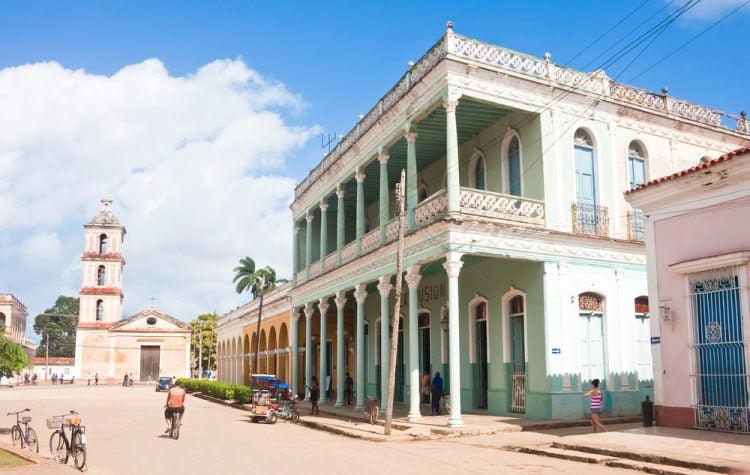
Although Cuba’s Communist government was once officially atheist, that designation was changed in 1992. In reality, the influence of the colonial-era church has never gone away, as seen here in the architecture of Remedios. Photo: nikolpetr/Shutterstock.com
There’s another way to travel Cuba on two wheels, one that I’ve done a couple of times in the past, and I have friends who have done it as well. Most resorts aimed at Europeans or Canadians have scooter rentals on-site. These are intended for tourists who only want to travel a few minutes to the beach or local markets, but in my experience, nobody is stopping you from taking them much, much farther afield. Or, that was the case a decade ago, at least—I haven’t been back to Cuba in a few years.
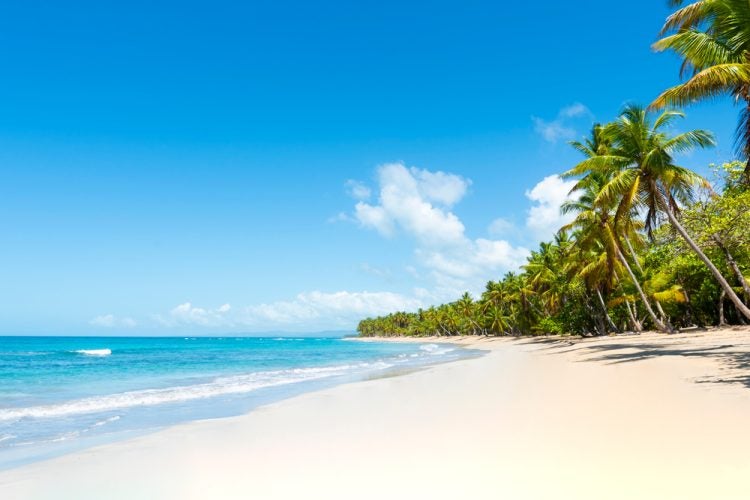
The stereotypical Cuban beach is covered in tourists, but if you explore, you can easily find empty coastline. Just be careful you don’t end up in a place that the military doesn’t want you to be. In my experience, they’re used to dealing with clueless outsiders, and are generally gracious. Photo: murkalor/Shutterstock.com
You might poo-poo the idea of touring on a piddly 50cc step-through, and I will admit it wouldn’t be my first choice either. Even the 125cc motorcycles that locals use would be a better option. However, the scooter came without the requirement for a government-approved guide, and it was easily fixed when I ran into a minor problem (a leaky tire), as the local mechanics knew the bike well. The under-seat storage allowed me to securely carry a few basics. When I met locals, they assumed (rightly) that I was a clueless traveler, not a foreign saboteur looking to cause trouble. The rental fee was reasonable, under $25 a day, and the scooter didn’t use any amount of fuel (which was cheap anyway). And, surprisingly, the low horsepower didn’t really matter, because horsepower is inherently better than donkey power, and when I visited, that’s what many locals were still using.
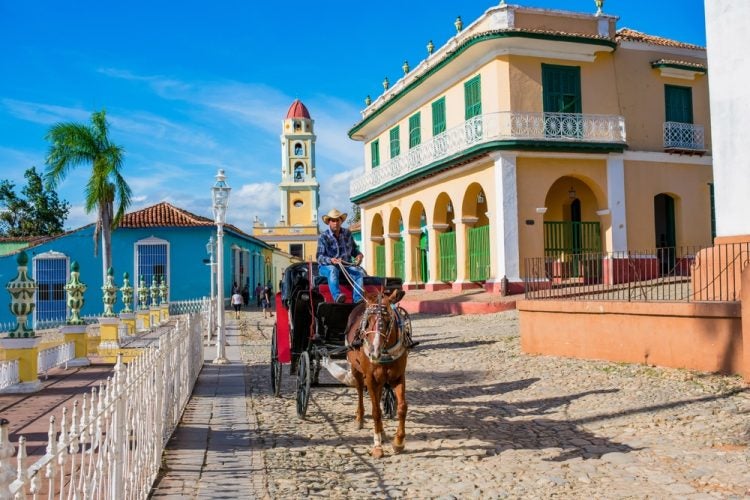
Horses and donkeys still move many locals around Cuba. This is the city of Trinidad, which has much of the architecture from the city’s sugar plantation days remaining intact. Now, it is a UNESCO site. Photo: Giovel Miguel/Shutterstock.com
One great thing about riding in Cuba is that, generally speaking, I found it very safe. I’m sure you can find trouble if you hang around seedy parts of town after dark, but because of the strong grip the government has on the country, there appeared to be no danger of being mugged or otherwise endangered by criminals. I’m sure it happens in larger cities, but I was riding around the countryside. I do note the Canadian government currently advises travelers to “exercise a high degree of caution” when visiting the country.
I did have to watch out for speedy tourists in rented Fiat 500s and Suzuki Jimnys, but aside from that sort of traffic, there wasn’t really much danger from cars. When I stayed on Cayo Santa Maria, the worst part of the scooter ride was the long slog against afternoon headwinds as I crawled along the causeway at turtle speed.
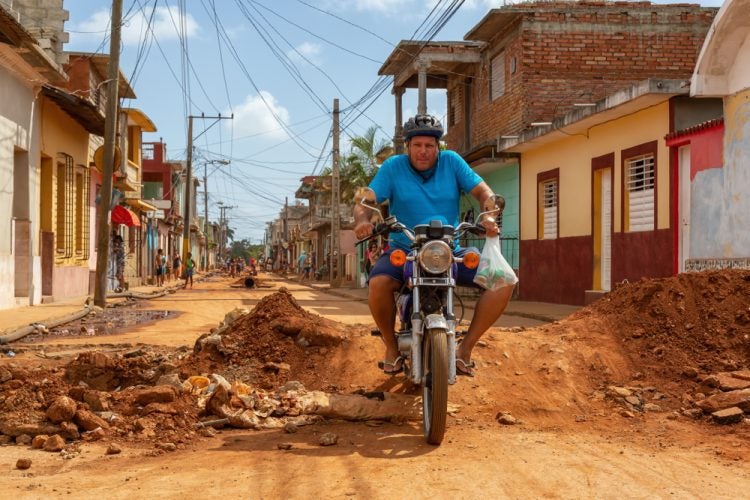
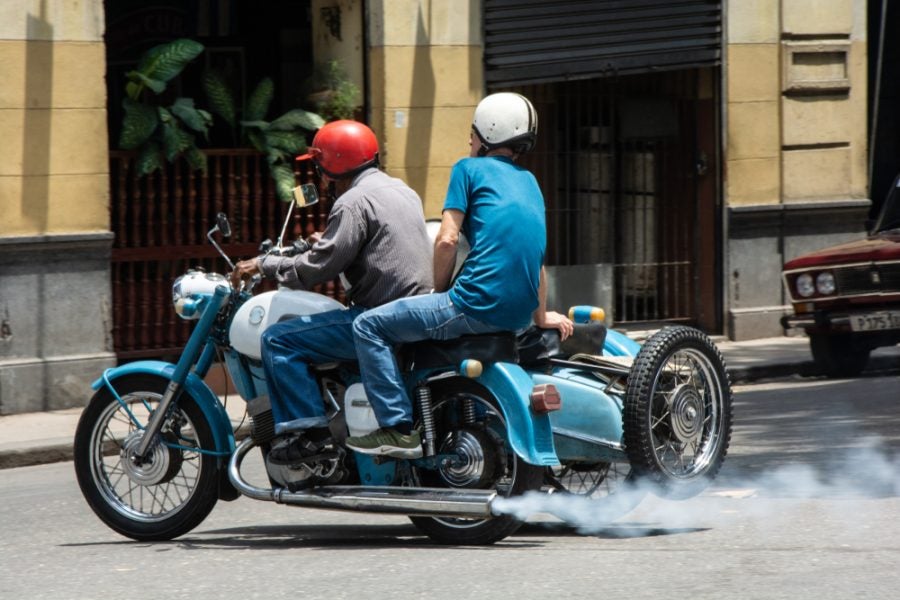
Not every street in Trinidad has charming old-world cobblestones. A small motorcycle like this is what locals ride, with some Chinese and even Japanese bikes mixed in with the old Combloc two-strokes and the vintage Harleys. If you could rent one of these, it would be far better than a scooter. Photo: EB Adventure Photography/Shutterstock.com
If I was to return to Cuba specifically for a scooter tour, I’d carefully assess which resorts had scooters available and plan on doing day excursions. This isn’t the same experience as traveling around the island’s bed-and-breakfast system (a homestay in Cuba is known as a casa particular, and these are government-sanctioned private enterprises). The homestays allow you to meet very interesting people and have frank conversations. However, you could still cover quite a bit of ground in a day and meet plenty of locals. One of my friends did this a few years back, basing day trips out of a resort in the island’s mountainous southern section, and he highly enjoyed it. I think that’s where I’d go to next time.
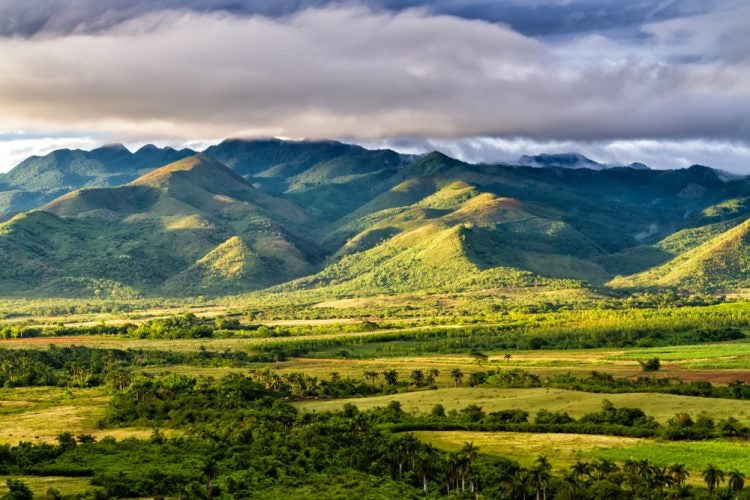
Cuba has a lot more than beaches and colonial architecture to offer. The hills in the island’s south offer gorgeous scenery if you care to travel on two wheels to see them. Photo: Milosz Maslanka/Shutterstock.com
But if you’ve got the money, and you want a nice bike and experienced guide and you don’t mind touring in a group, an organized ride like Exit Tours or Edelweiss can be a very enjoyable option. I met the Edelweiss group once when I was down there, and I will say that while I didn’t think the Harleys they were riding were well-suited for the roads (they also do ADV bike tours), I was nevertheless jealous that they were enjoying a proper tour through the country, while all I was seeing was the local area…
Is Cuba for you? I know lots of people shy away from the country because of its Communist regime. While the government might not be to your liking, I think such feelings could be tempered by realizing that, for many Cubans, you are not only a way for them to earn a better livelihood, but also a representative of a different form of government. Your behavior towards them could be seen as a way of representing the advantages you see in your own political system.
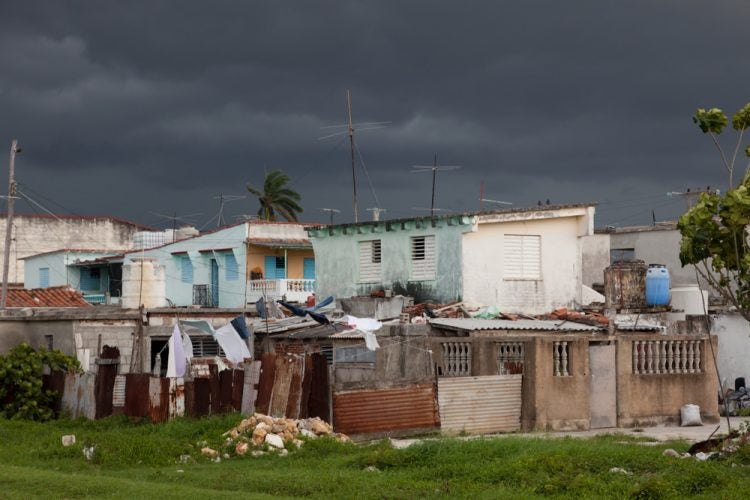
Many Cubans live in ramshackle houses that are heavily damaged when hurricanes blow over the island. Photo: Laetitia Fernandez/Shutterstock.com
The main reason I can think of to stay away is the general shortage of food and other supplies. Cuba has not quite recovered from issues raised in the COVID-19 pandemic, and locals have difficulty accessing basic necessities. Perhaps you can use your trip to help locals in some way—I know many tourists bring clothes and toiletries to give to locals when they arrive. YMMV, but don’t be shocked if you get to your accommodations and find the diet is very limited. Whether you blame the Communist government or the American embargo, life in Cuba has not turned out the way that the general population had hoped when they overthrew their previous leadership in the 1950s.