

Not long ago, I read Zac’s article about road maps – and whether they were a thing of the past (they aren’t, according to him, but, it seems, they are increasingly harder to find).
That got me thinking about another navigation skill that might be slowly but surely being relegated to history: natural navigation. Knowing where North is by the sun, judging your direction by which way the river flows, that sort of thing; having grown up picking mushrooms with my grandad in the forests of Lithuania, I still remember most of his advice on what to do when you get lost. Moss grows on the North side of trees and rocks; ants tend to build their nests facing South; if you’re lost, backtrack to the last thing you remember.
In the world of GPS navigation, I never lost my fascination with orienting myself using nature and the sky. So much so that one of my all-time favorite books is The Natural Navigator by Tristan Gooley, a Fellow of the Royal Institute of Navigation, the Royal Geographical Society and the Royal Scottish Geographical Society.

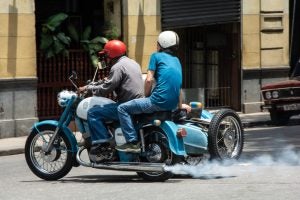
Photo: Smit/Shutterstock.com
Tristan has led expeditions in five continents, climbed mountains in Europe, Africa and Asia, sailed small boats across oceans and piloted small aircraft to Africa and the Arctic; even more intriguingly, he has walked with and studied the methods of the Tuareg, Bedouin and Dayak in some of the remotest regions on Earth and tested Viking navigation methods in a small boat in the north Atlantic. In his books, Tristan talks about all these experiences – how the Tuareg find their way across desert dunes by tracking the wind, or how the Polynesian natives judge distances in the open sea by the color of the water. I got especially intrigued by Tristan’s natural navigation expertise when I was chasing the Dakar in South America; surely, the insights from the Tuareg and the Bedouin might come in handy when you’re racing across the desert after a recent sandstorm.

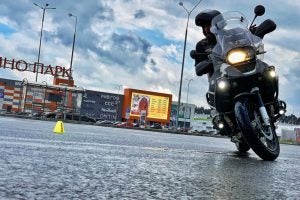
Photo: HEMZA LADJ/Shutterstock.com
Are those skills necessary, though? Perhaps not; the satellites have got us covered. However, I do vividly remember one of the first motorcycle navigation lessons learned the hard way a decade ago in Peru: planning my route from the coast to the Andes with a very basic Google Maps setup, I forgot to factor in a ridiculously simple and obvious thing: The Andes. Three hundred kilometers across flatlands and three hundred kilometers across towering mountains are two very different distances, as I discovered, arriving at my destination past midnight, shivering and soaking wet from a sleet storm at high altitude, instead of the planned 5 PM arrival with plenty of daylight to spare.
Now, that’s an embarrassing rookie mistake (though I still secretly hold a grudge against Google Maps), and one that I have never made again; and, my grandad’s lessons might have saved my bacon in Bolivia when I found myself lost on my way to Uyuni, but, trusting I was heading South, I did eventually find my way.

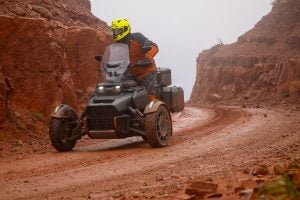
Photo: Egle
On the other hand, I have seen riders in Europe completely lost and bewildered when their GPS died – even though European roads have, you know. Road signs.
However, as we rely on the GPS more and more, perhaps it’s only natural that even the most basic sense of orientation goes out the window: according to neuroscience, the neural pathways in the brain are much like muscle in the sense that if you don’t use it, you lose it – and as we learn to trust the suggested routes, mileages, and ETAs on the apps so much, we don’t even think of it.
But maybe we should. Even if you’re not venturing across the Gobi Desert or the Kalahari, being able to orient yourself using landmarks, road signs, and nature can only enrich the experience. Instead of following the GPS route blindly, you’re observing more, you’re noticing more, you’re in the landscape more. And, in the words of Tristan Gooley, “is natural navigation a necessary skill in the modern-day world? No, of course not. But then, music or poetry is not necessary, either, yet those things make our lives immensely richer, more beautiful, and more extraordinary”.
I agree. But what’s your take – as ADV Riders, should we be able to tell where North is whether we’re in rural Vermont or the Bolivian Andes, or can we trust the GPS to always point us in the right direction?
Share in the comments below!