
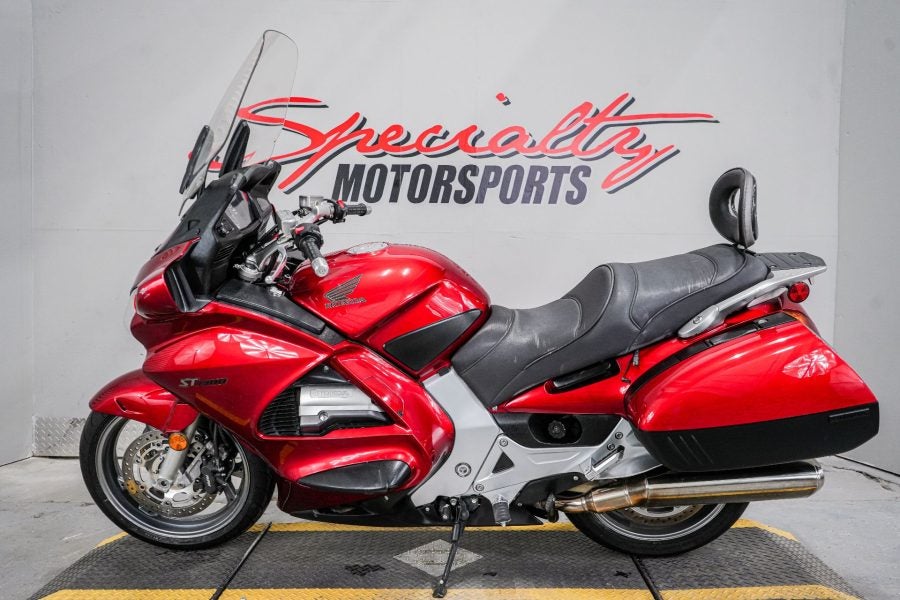
Sport touring motorcycles aren’t dead yet (the new NT1100 proves that Honda still sees a market). But they aren’t quite as glorious as they used to be, either. Except for BMW (which still has the K1600 as well as the just-released 1300 version of its RS and RT lines), the other OEMs have mostly stepped away from full-power sport tourers, which is too bad. Once upon a time, machines like the Honda ST1300 showed that touring riders could have their cake and eat it too—or at least, they could come pretty close.
Honda history
The ST series began with the ST1100, built from 1990 through 2002. These were supposedly built to compete with BMW’s K-series tourers, although I would imagine the Kawasaki Concours 1000, introduced in 1986, was also a target. The ST1100 was perhaps less sporty than the Concours, but definitely more sporty than the Gold Wing. It hit that sweet spot that European moto-travelers like, with around 100 hp (lots for that era) from its carbureted V4 powerplant. Remember, this was in a time when the VFR/Magna/Sabre models were not that long-past, and Honda smartly re-used its technology and built a powerful bike that gave riders the kicks they were looking for, while still working over the long haul.
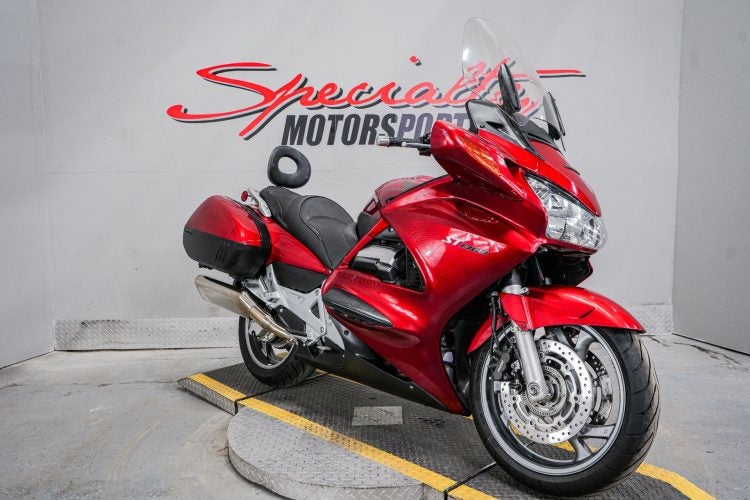
In 2003, the ST1300 came in to replace the 1100. The biggest upgrade was a new engine with EFI. Photo: Specialty Motorsports
The ST1300 arrived in 2002 in Europe (called the Pan European) and in 2003 in the US, where it was called the ST1300. Layout was basically the same; a 2.2-gallon fuel cell under the seat helped a lot with the ST series’ top-heavy handling, although the ABS-equipped 1300 could still push to 700 pounds or heavier with a full tank of gas (including another 5.5 gallons held in the usual over-the-engine position). The new aluminum frame could only help cut so much weight.
But there was muscle to haul that weight. The 90-degree V4 engine grew to 1261 cc, with chain-driven DOHC heads and four-valves per cylinder, and dual counterbalancers smoothing out the vibration. Now, it was fuel-injected, and made 117 horsepower at 8,000 rpm, with 86 pound-feet of torque at 6,500 rpm. It still had a five-speed gearbox, to some users’ dismay, and a shaft drive that reduced maintenance. A 660-watt alternator was standard.
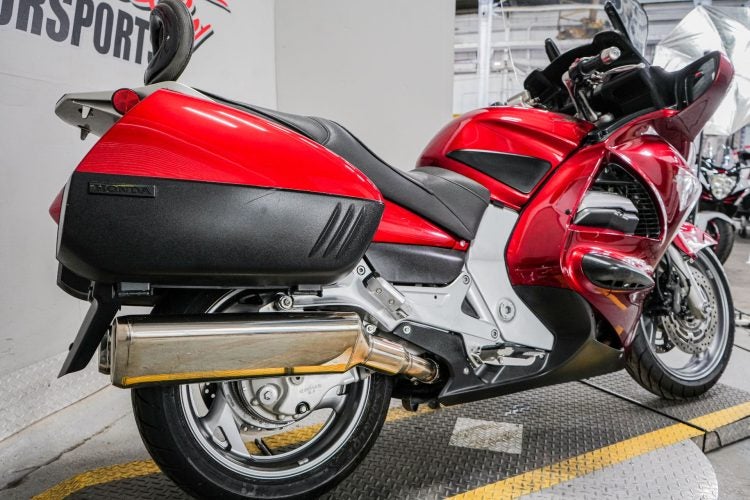
Those bags were supposed to be pretty decent OEM luggage, and they were included with the bike, unlike some other sport tourers that come without the bare essentials for touring. Photo: Specialty Motorsports
In other words, it had everything needed for a zippy long-haul tour, powering all the electro-gadgets that you could conceive of. And riders loved it. Here’s John Burns’ take from the original review for MO in 2003:
After a fine Honda-sponsored bloat at the lovely El Encanto in way-too-ritzy Santa Barbara at which I did my best to keep my Cabernet flow minimal (ie, less than what the space shuttle consumes during lift-off), it was time, early next morning, to roar back down the freeway toward lovely Los Angeles. The hard bags are excellent, and probably as easy off-on as the BMW industry standard once you get acclimated (they’re so integrated into the bike, and narrow, that we hardly ever take them off).
Some other people were moaning about the fuel injection being abrupt; maybe slightly so, but it seems more like in spite of the engineers’ efforts, there remains a noticeable amount of lash in the ST’s driveline, which riders sensitive to that type of thing won’t care for. Both bike and flywheel are massive enough that it’s not the sort of thing that will upset the chassis when you’re intent on scraping footpegs, but it does make for the occasional lurchy gearshift.
Throw it in top gear, crank it up to between 80 and 90 mph, and fuggedabout it; ahhh, this is what bikes like the ST are meant to do, for about three hours at a stretch. The familiar V-four purr burbles almost imperceptibly through the grips, turning over around 4500 rpm in exchange for 85 or so mph, the LCD displaying air temperature, time o’ day, and about five other things.
If you read the whole thing here, you’ll see Burnsie liked the adjustable shock, but not the non-adjustable fork. He also beefed about how the bike’s exhaust could make the rider overheat, and plenty of other owners have had the same complaint over the years.
The biggest complaint, though, came from the police. Not because of the bike’s speed, but because the UK-based police departments that bought the early patrol version of this bike reckoned it was unsafe to ride these heavy bikes at high speeds, saying that handling went awry—many of them got rid of the bike, after initially adopting it. It became quite a controversial topic, with moto magazines investigating the “Pan Weave.” Was it really as unsafe as some owners and emergency department riders claimed? If the bikes were loaded properly and speeds were kept to not-insane levels, the ST seemed to suit most riders, and many police departments inside and outside the UK ended up with these bikes despite the early misgivings. Until Honda axed the line in 2013, they really were a well-liked machine by most users.
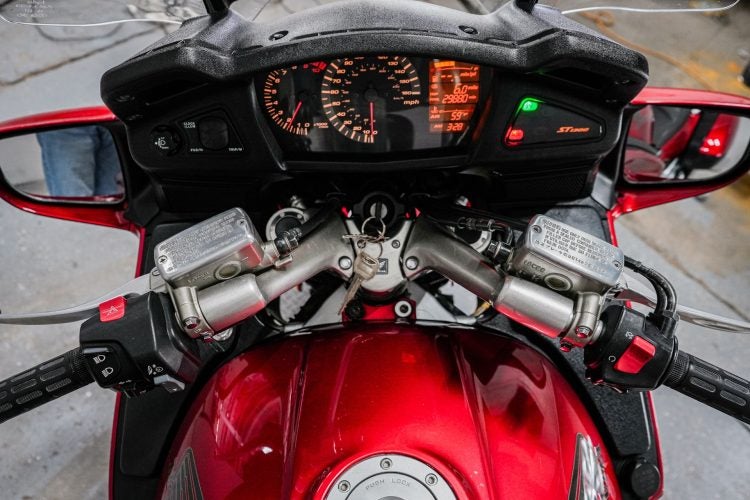
This machine was used, but not hard-used. The engine is probably good to go all the way to 250,000 miles with proper maintenance. Photo: Specialty Motorsports
But the competing FJR1300 was lighter and had more power—the ST was good, but in many of the ways that mattered the most, the FJR was better. Honda talked about building a new V4 sport tourer in the mid-2010s, but all we got was the CTX1300. That V4 cruiser-tourer wasn’t terrible when compared to the smaller CTX-series models, but certainly wasn’t a popular ride either. Basically, Honda didn’t have a real sport tourer until they came out with the NT series. It shall be most interesting to chart the progress of *that* series in the years to come.
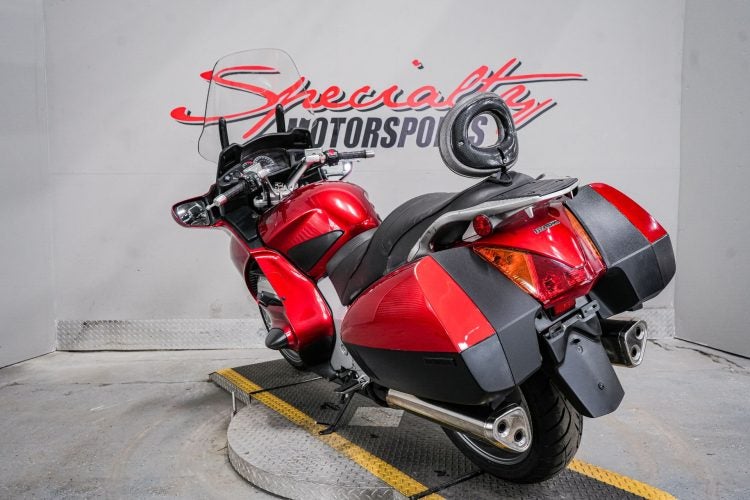
The ST1300 holds its price well, and the asking price near $6k is not insane. Photo: Specialty Motorsports
This bike here
Specialty Motorsports in Sacramento, California is selling this ABS-equipped 2008 ST1300 for $5,795. It has just under 30,000 miles on the clocks, so that price isn’t insane, especially as it has the antilock brakes and STs in general hold their value pretty well. For more details, see their ad here.