
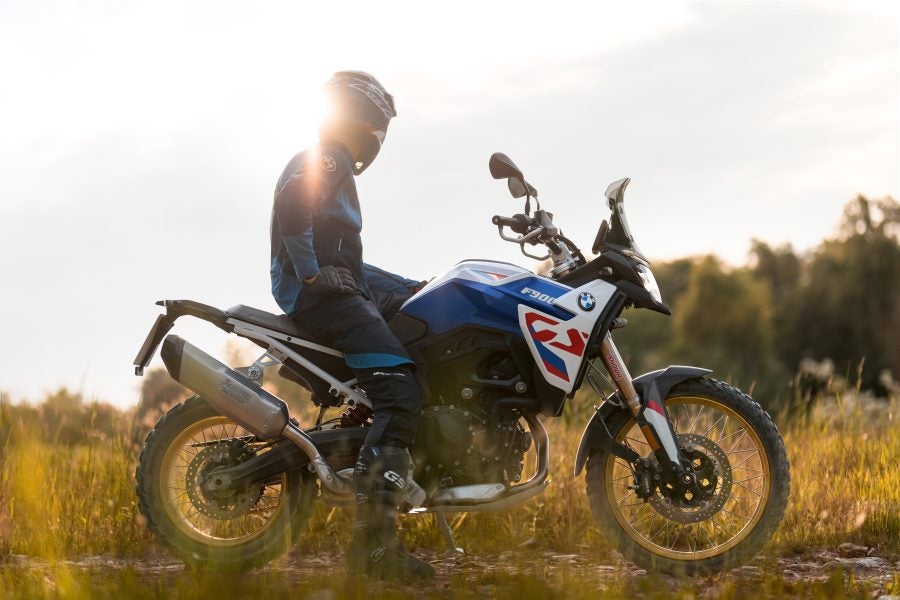
As predicted, BMW has launched its next-generation parallel twin adventure bikes today. Now, we have the new 2024 BMW F900 GS and the ruggedized F900 GS Adventure, along with the less-aggressive F800 GS.
F900 GS
Gone is the old 850 engine, replaced with an updated 895cc parallel twin with 270/450 firing order. The new engine makes 105 hp at 8,500 rpm and 69 lb-ft of torque at 6,750 rpm. An Akrapovic exhaust comes as standard, and BMW includes Rain and Road as standard ride modes, controlling engine output and safety electronics (other ride modes are available as options).
The engine is similar to what we’ve seen on previous F900 models, so while it’s a welcome boost in power, we suspect most potential buyers will be more interested in the massive weight loss program that BMW arranged for the F900 GS. The new bike is 13 kg lighter than the previous F850 GS. That comes from big savings in some areas (a lightweight plastic fuel tank is a big help, and a new subframe). But BMW paid a lot of attention to the small things as well, cutting weight off small parts like the new adjustable gearshift.
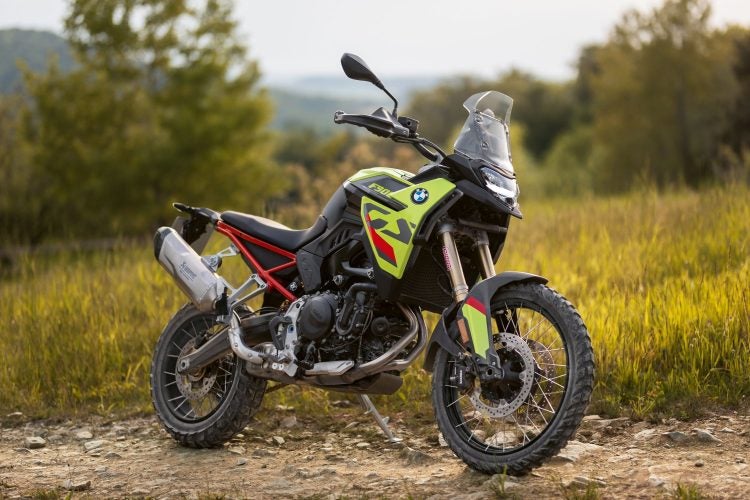
Available in much more radical paint than the previous model. Photo: BMW
Other small parts get re-designs for better usability, like the rear brake pedal, which now sits higher. Dirt-friendly footpegs and handguards come standard. There’s a 6.5-inch TFT display and new LED headlight. BMW also included a new holder plate that allows riders to mount their GPS or other electronics. Heated grips are also standard equipment.
Throughout BMW’s presentation, there’s constant emphasis on off-road capability as well, which is why we see new adjustable suspension fore-and-aft on this middleweight.
Curb weight is 482 lb.

Throw on better suspension, a bigger gas tank and other dirt-friendly features and you’ve got the F900 GS Adventure. Photo: BMW
F900 GS Adventure
As you’d expect, much of what’s true for the F900 GS is also true for the overland-oriented F900 GS Adventure variant. The new engine is also standard here, with bodywork optimized for off-road travel, and aluminum crash bars. BMW added a larger-capacity fuel tank and longer-travel suspension, with fully-adjustable fork to make it more off-road friendly.
Curb weight is now 542 lb.
F800 GS
The F750 GS is gone, replaced by this version. The parallel twin engine gets a boost to 87 hp at 6,750 rpm and 67 lb-ft of torque at 6,750 rpm. For A2 license holders in the EU or UK, BMW can detune the bike to a peak output of 45 hp.
This isn’t just a big-bore job, though. BMW also gave the bike heated grips and a TFT display as standard (same 6.5-inch screen as the F900 models, a big upgrade over the old 700’s analogue clocks). Handguards and a Variocase rack are also standard, and heated grips. In other words, a lot of the cost-cutting on previous versions of this bike is now gone. Curb weight is 500 lb.
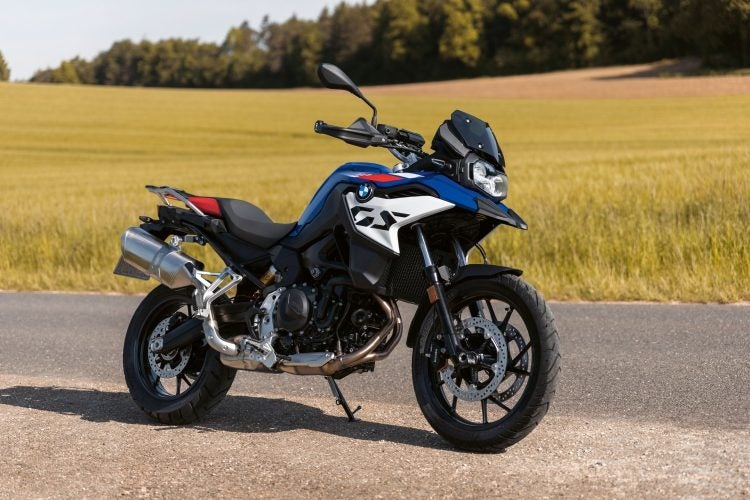
The F800 GS isn’t as hard-edged as the more performance-oriented 900 models, but still comes with plenty of muscle as well as niceties like a new 6.5-inch TFT screen. Photo: BMW
Options?
Of course, BMW will have an absolute raft of optional add-ons, including the Enduro Pro package of dirt-friendly accessories. As always, there will be luggage racks, side cases and top boxes. Ride Modes Pro adds a couple of additional ride modes as well as Dynamic Brake Control emergency brake system, and engine drag torque control (adjustable engine braking).
Pricing?
We see UK MSRPs listed (£9,995 for the F800 GS, £11,995 for the F900 GS, £12,350 for the F900 GS Adventure). So far, we have not noticed any for North America yet. We’ll update you when we can.