

OK, let’s get two things out there, right off the bat.
#1 – This isn’t a story saying current US government policy is either good or bad. I don’t care how you voted and it doesn’t matter at this point anyway. The situation we are dealing with is what it is, whether you like it or don’t. If an avalanche of bickering thoughts is posted below, I’ll turn off comments, and maybe throw a few bans out, as per our No Toxic Comments rule. If you want to get snarky, that’s what the CSM forum is for. If you’re a proponent of communism, fascism or any other ‘ism, please fight it out there.
#2 – I myself am not American. I live just north of the border, in Canada.
Having said that, let’s get to the question: Is current government policy about to kill off the cheap motorcycle in the US market? Automotive outlets are asking this about cars, but as usual, practical two-wheeled transportation is generally left out of the conversation.

A Yamaha R125 on the road in Spain. Europeans have far more choices in the cheap bike department than we do in North America, because their roadways and speed limits make more sense for those machines… and so do their laws. Photo: FernandoV/Shutterstock.com
Based off current US policy, I think the answer is No. Cheap bikes are currently mostly unaffected. But that could change very quickly.
The automotive world is currently a-flap over a White House announcement on March 26 that started out like this:
COUNTERING TRADE PRACTICES THAT THREATEN TO IMPAIR U.S. NATIONAL SECURITY: Today, President Donald J. Trump signed a proclamation invoking Section 232 of the Trade Expansion Act of 1962 to impose a 25% tariff on imports of automobiles and certain automobile parts, addressing a critical threat to U.S. national security.
And a little bit later, we get this:
The 25% tariff will be applied to imported passenger vehicles (sedans, SUVs, crossovers, minivans, cargo vans) and light trucks, as well as key automobile parts (engines, transmissions, powertrain parts, and electrical components), with processes to expand tariffs on additional parts if necessary.
There is no mention of motorcycles in there anywhere. Read the statement yourself. The only manufacturers that seem to be affected are Chinese-made bikes, which appear to have a 10 percent tariff on them, if I’m reading the rules correctly.
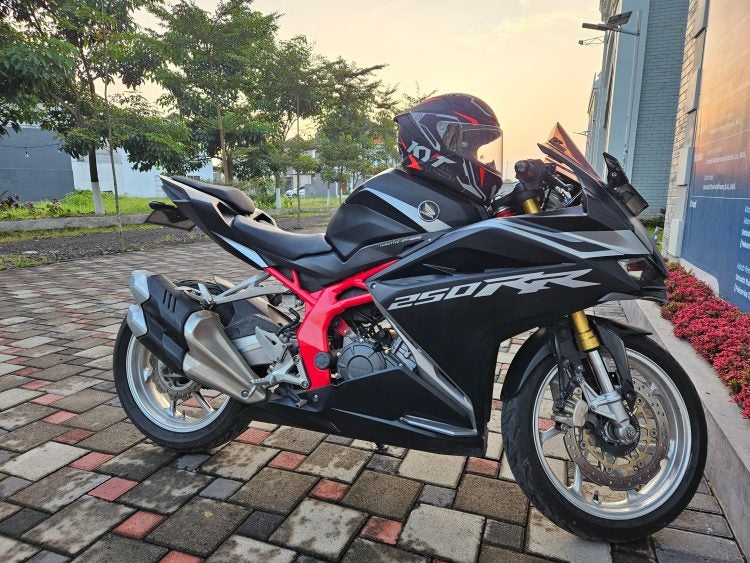
Globalization of manufacturing makes it harder to figure out what might be tariffed, and what might not be. For instance, this Honda CBR250R wears a Japanese name, but was actually made in Thailand. Photo: SS. Studio/Shutterstock
But don’t be surprised if that changes for the following reasons:
- Other countries are ramping up their tariffs on US-made motorcycles. Europe has already had heavy tariffs on US-built bikes for several years, and Harley-Davidson went so far as to establish overseas factories to try to circumvent these tariffs. The EU regulators said that wasn’t good enough, and recently, upped their tariff on US-built bikes to a whopping 50 percent. This is certainly not conciliatory behavior, and may very elicit a retaliatory tariff levied on bikes from Euro OEMs. Not that there are any cheap bikes coming in from Europe, but there are cheap bikes bearing Euro badges (KTM 390, BMW G310, etc.). Those Asian-built bikes could conceivably get caught up in a tariff on their Euro owners, seeing that the EU trade courts have established that pattern already.
- Motorcycles could get caught up in a blanket tariff. Earlier in the winter, President Trump threatened Canada and Mexico with across-the-board tariffs that would theoretically apply to almost all consumer goods. Canada certainly isn’t making any affordable motorcycles, but Mexico is (that’s where the Trail 125 comes from, and the XR150L, last I heard—that might have changed). These across-the-board tariffs could theoretically be applied to other countries as well, and it seems likely they will be threatened at some point this year, at least.
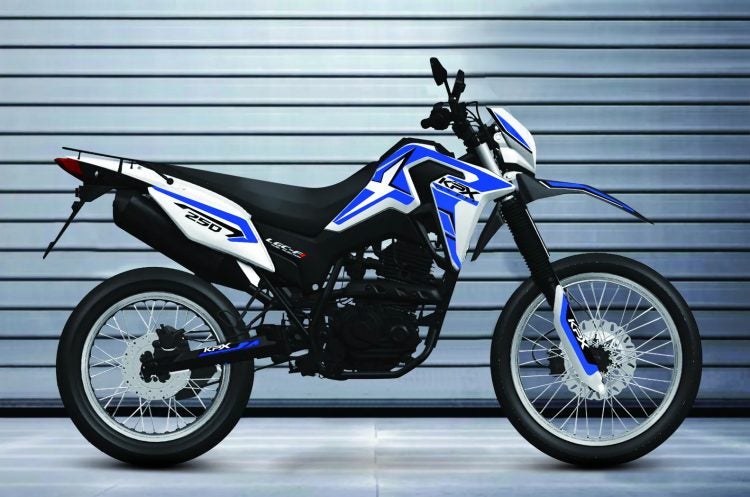
Chinese-built motorcycles will probably face tariffs for the next little while, but their MSRPs are low enough that it won’t matter as much. Photo: American Lifan
But it’s not all doom and gloom. Consider the following:
- The word on the street is that the Canadian and Mexican across-the-board tariffs may end up being targeted at specific sectors, if they come in at all. President Trump has certainly been up-and-down in application of tariffs, and threats have not panned out as scary as they first sounded. So Mexico might see some tariffs, but not aimed at motorcycle production.
- Some countries also seem to be flying under the radar. Most Japanese-badged cheap bikes are made in Thailand, and we certainly haven’t heard much talk about a tariff on Thai-built vehicles. Made-in-Japan bikes aren’t really cheap anymore, but they are at least good value for money, and there hasn’t been a lot of talk about tariffing those bikes either. And even India, which notoriously had a very high tariff on bikes made by any foreign country (a big reason why Harley-Davidson set up production there), has dialed back its tariff on US-made bikes. In other words, they look like they’re trying to play ball.
The bottom line
The reality is this: Only current administration insiders know exactly what’s happening next, and while we can factor in the points above, none of it really matters. The government will do what it is going to do. And frankly, there aren’t a whole lot of cheap bikes left anymore anyway. Aside from the two small Hondas mentioned earlier, and their MiniMOTO lineup, most of the Japanese-badged bikes are at least $5,000 now, no matter where they’re built (for example: The Yamaha XT250 is $5,499, and made in Brazil).
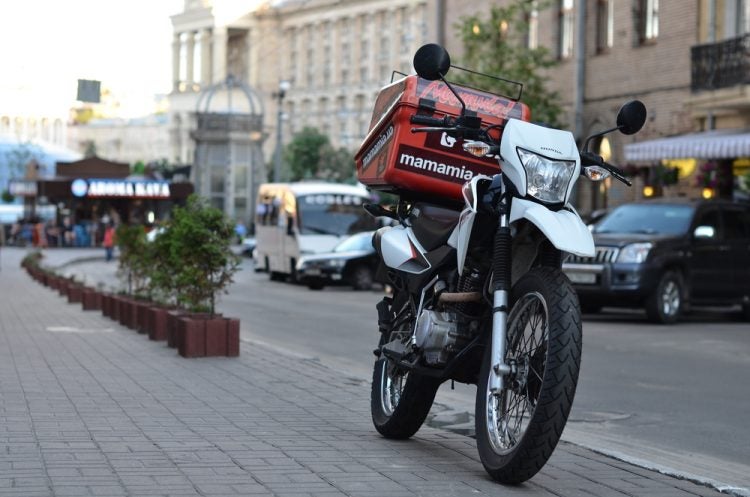
For better or for worse, lower-priced bikes like the Honda XR150L are finally showing up in North America. Tariffs may make them less appealing. But the real question is: What’s going on to cause a market for these bikes in the first place? And if tariffs continue to pop up, will the moto market be forever altered? Photo: alexfan32/Shutterstock.com
So what it boils down to is this: If you want a new motorcycle, right now might be a really good time to buy (we discussed this recently here). Even if tariffs do not come into effect on motorcycle imports, other factors are driving up the MSRPs. This isn’t saying that purchasing a new motorcycle is a wise financial decision… but it might be less silly now than it will be in a year’s time.