

As far as I can tell, we can now purchase all the adventure bikes and dual sports that will hit showrooms in time for some riding this season. Maybe the KTM 390 or Suzuki DR-Z4S deliveries are a few weeks away, but at this point, you should be able to put money down at a dealership on whatever new bike you want. And, if you’re really interested in a new machine, here are three good reasons why you might want to get spendy right now.
You Can Buy Whatever You Want
Realistically, your choices for a new adventure bike or dual sport are probably the best they’ve been since the early 1990s. Want an uber-flagship? You can get something like a KTM 1390 Adventure or BMW R1300 GS with technology that was unimaginable a generation ago, and with handling much upgraded from the big-bore bikes of the past. Chassis technology has come a long way, and electronics make powerful machines easier to control than ever before.
If you don’t feel like spending that much money, I don’t blame you. But the new middleweights like the KTM 890 Adventure, or the Yamaha Tenere 700, or the Honda Transalp all offer basically the same features at a lower price tag, and still pack more than enough power to cross continents at lose-your-license speeds.
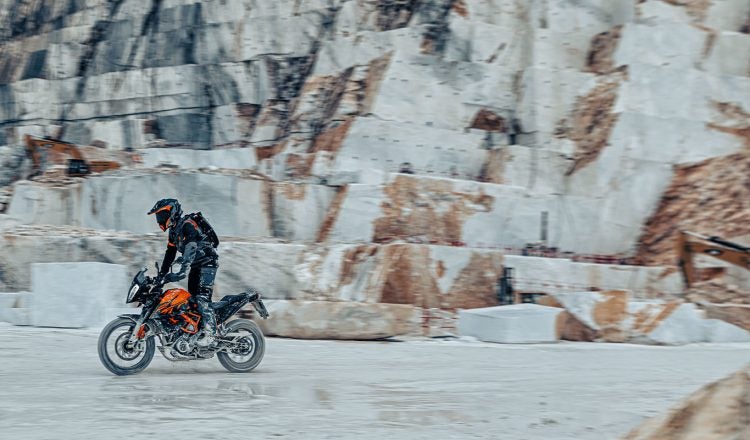
The KTM 390 Adventure is a great example of just how much bike you can get for your money at the lower end of the financial spectrum now. Photo: KTM
Maybe you’re looking for something even more manageable, physically or financially speaking. There are new 400-450 adventure bikes and dual sports, the Japanese 300 four-stroke dual sports are super-solid, and we even see Honda’s go-anywhere CT series returning with the Trail 125.
What it comes down to is this: Whether your budget is in line with Honda’s XR150L or their CRF1000L Africa Twin, you can buy it. You can buy bikes from China. You can buy motorcycles from India. You can buy electric motorcycles., and internal combustion engines are still alive and well despite promises that they’ll be banned in the next decade. You can even still buy two-stroke motorcycles that you can street-plate.

Back in the late 1980s and early 1990s, North America had a lot of choice in the dual sport and ADV world, but the chopper and supersport scenes kind of killed those choices, followed by the 2008 recession. Now, we see a wide variety of choice again. Photo: ghiz / Shutterstock.com
North American riders in particular have not seen this much choice for at least 30 years, and judging by current market trends, we may never see them again. Tariffs and piracy and economic turmoil all directly impact what’s available, and when it’s available. If you see a bike you want, don’t count on it being here in a year’s time or two year’s time.
Prices are going up
I don’t know what’s going to happen with interest rates or currency fluctuations going forward, but I do know this: Over the past decade-and-a-half, almost anything made of real materials has gotten more expensive. Houses, cars, tools, guns, motorcycles; the only exception may be some consumer electronics.
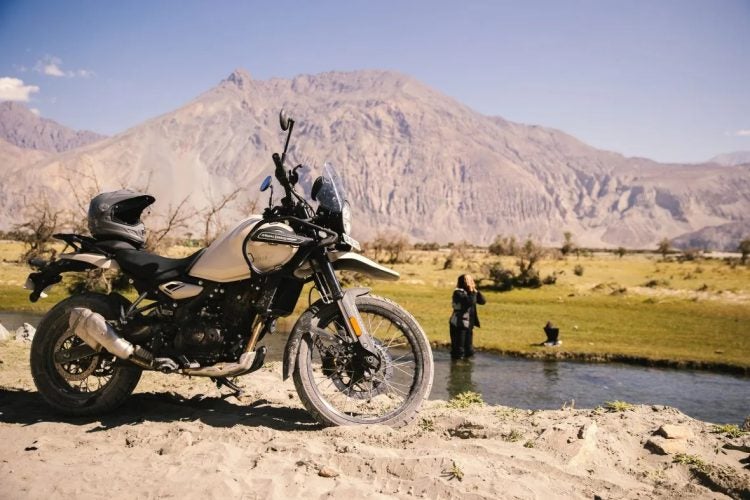
Bikes like the Royal Enfield Himalayan 450 see prices kept down by overseas production. That trick will only work for so long. Photo: Royal Enfield
Companies fought this by outsourcing manufacturing into countries with cheaper labor and building better factories. Japanese-badged bikes made in Thailand or Euro-badged bikes made in modern plants in China or India are the perfect example. But COVID-19 and governments’ responses accelerated the issues that arise with this business model, and bikes have been getting more expensive ever since. There aren’t really any clever price-reduction tricks left.
In North America, the full effects of cross-border tariffs aren’t really being seen yet, as many bikes were imported before these taxes were put in place (CFMOTO brought a lot of bikes into the States before the American tariffs started; Harley-Davidson sent a lot of bikes to Canada before the tariffs went into place there).
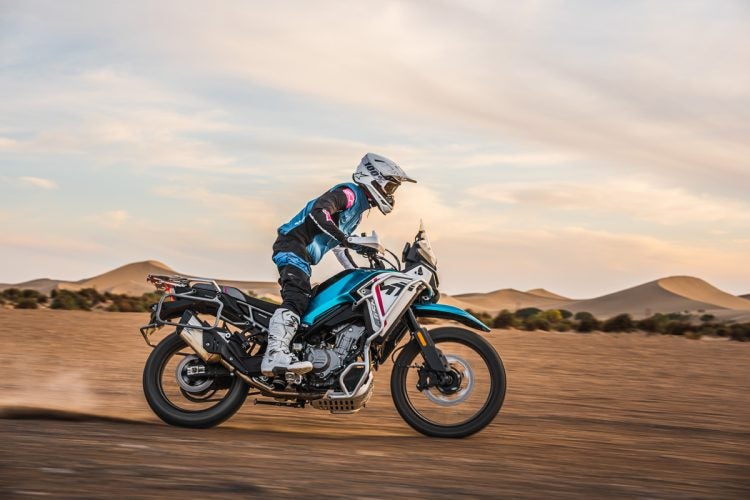
Even if tariffs on bikes like CFMOTO’s 450 Ibex are removed, the current market volatility will almost certainly be reflected in future pricing. Photo: CFMOTO
Who knows what the future is here—tariffs may go up, down, or be removed, or removed then reinstated. It is impossible to predict. But it does seem likely that no matter what happens with the tariffs, the consumer will almost certainly pay more. Uncertainty alone will impact prices.
Then there is always the question about the buying power of your money. I am not going to predict inflation rates for the next few years, but generally speaking, this factor alone drives up prices and removes spare income. If you want a bike, factor this into the purchase.
Travel is still relatively easy
Before COVID-19, we took cross-border travel for granted. Now, we’ve seen governments can shut down tourism and other travel basically overnight. Right now, in mid-2025, you can still buy a bike and ride it wherever you want, more-or-less. Some places in the Middle East or Eastern Europe or Africa may be difficult or unadvisable, but if you want to buy a KLR and ride it through Siberia, that’s doable.
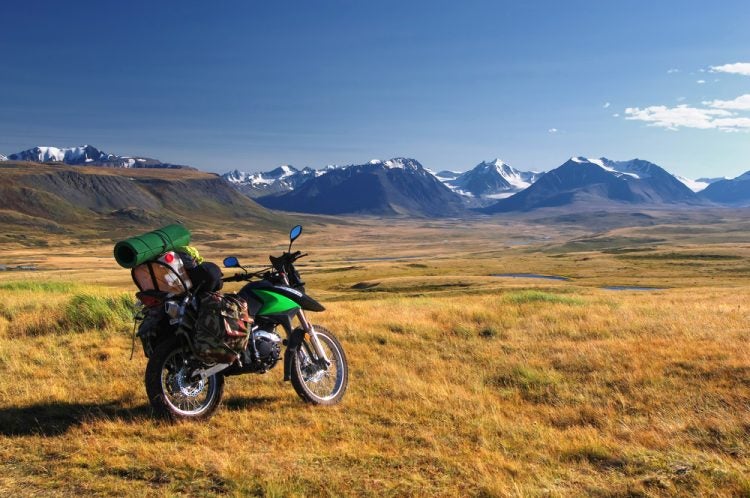
Eastern Europe is still open for travel, but geopolitical tensions are lining up to make globe-circling rides more difficult. Photo: lexander Demyanov/Shutterstock.com
This may not be the case for much longer. We appear to be in the middle of a so-called Fourth Turning, and the world is changing quickly. To be clear, you can also travel on a used bike, but if you have been thinking of buying a new machine for that RTW trip, it makes sense to get on it as soon as possible.
Of course, the financial realities of travel are also tied to the effects of tariffs and inflation and all the other factors mentioned earlier. Changing financial relationships between countries will also affect our ability to travel. If we continue to see geopolitical changes at the level of the past few months, travel is not going to be any easier in the years to come. If you want to Ride The World, get busy.
… And one good reason not to buy a new bike
There is one good reason not to buy a new bike: You can’t afford it.
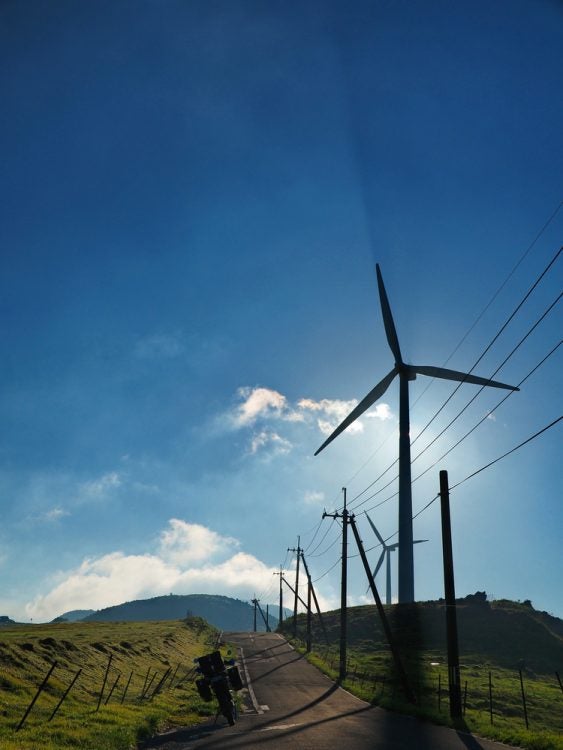
Used bikes, like new bikes, have an excellent array of choices available. Even if you can’t buy a new bike, you can buy a new-to-you bike with more choice than you had a decade ago. Photo: skywings00/Shutterstock.com
A lot of us are in this position. Rent, mortgage, student loan payments, car payments, rising food costs, declining wages and all sorts of other economic pressures have combined to reduce our discretionary income and make it harder to buy a brand-new bike.
If you’re in this position, consider that there’s just as much choice in barely-used motorcycles as there is in new bikes. Maybe you can’t afford a new Kawasaki Versys 650, but a lightly-used model is easy to find thanks to the Internet. Used bike shopping has never been easier, and frankly, buying a barely-used bike is usually a better financial decision anyway.
Also consider that depending on your situation, a motorcycle might save you money. Sort of. It is possible to reduce transportation costs by commuting by motorcycle instead of a car, but you’ll be riding something with a small engine and cheap tires. Think Honda CBR250, not a Suzuki GSX-R1000. Only small-bore bikes have fuel economy that can really outperform a four-cylinder economy car, and their consumables like tires, chains and other parts, not to mention insurance rates, are also cheaper with a small bike. Shop accordingly.