

People say adventure bikes are all-rounders, machines that can do it all, and they’re right. But if you subtract dirt riding from the equation, then you might want to consider Japan’s naked and semi-naked machines in the 500-1200 range. Powered by detuned versions of their sportbike engines, these machines have served riders well for generations, and the Yamaha FZ-6 was one of the best of the lot.
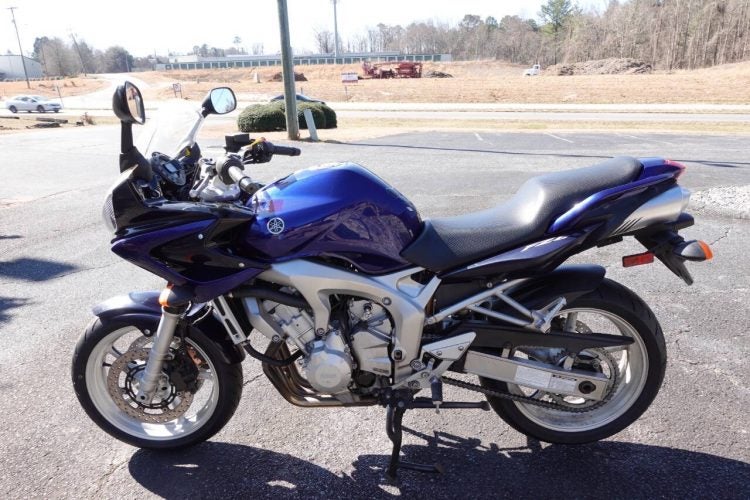
The upright riding position was like the competing Suzuki Bandit or Honda Hornet, much better-suited for the real world than the supersports and superbikes of that era. Photo: Blue Ridge Riders
A Time Of Transition
In the early 2000s, the motorcycle industry was in the middle of switching high-performance motorcycles from carburetors to EFI. The FZ6 benefited from this change, as its DOHC 16-valve motor was based on the 2003 YZF-R6 powerplant. Of course Yamaha tuned it for mid-range power on the street instead of high-revving racetrack muscle, but it could still make almost 100 horses at the crank (98 horsepower, with 12k redline). If you were willing to wring it out, you could hustle. And with 47 pound-feet of torque at the 10k rpm mark, it had enough torque for practical purposes—although some riders did complain it was a bit weedy at lower rpm.
-
- Sign of the times: This was the era where those winking headlights really took over. Photo: Blue Ridge Riders

-
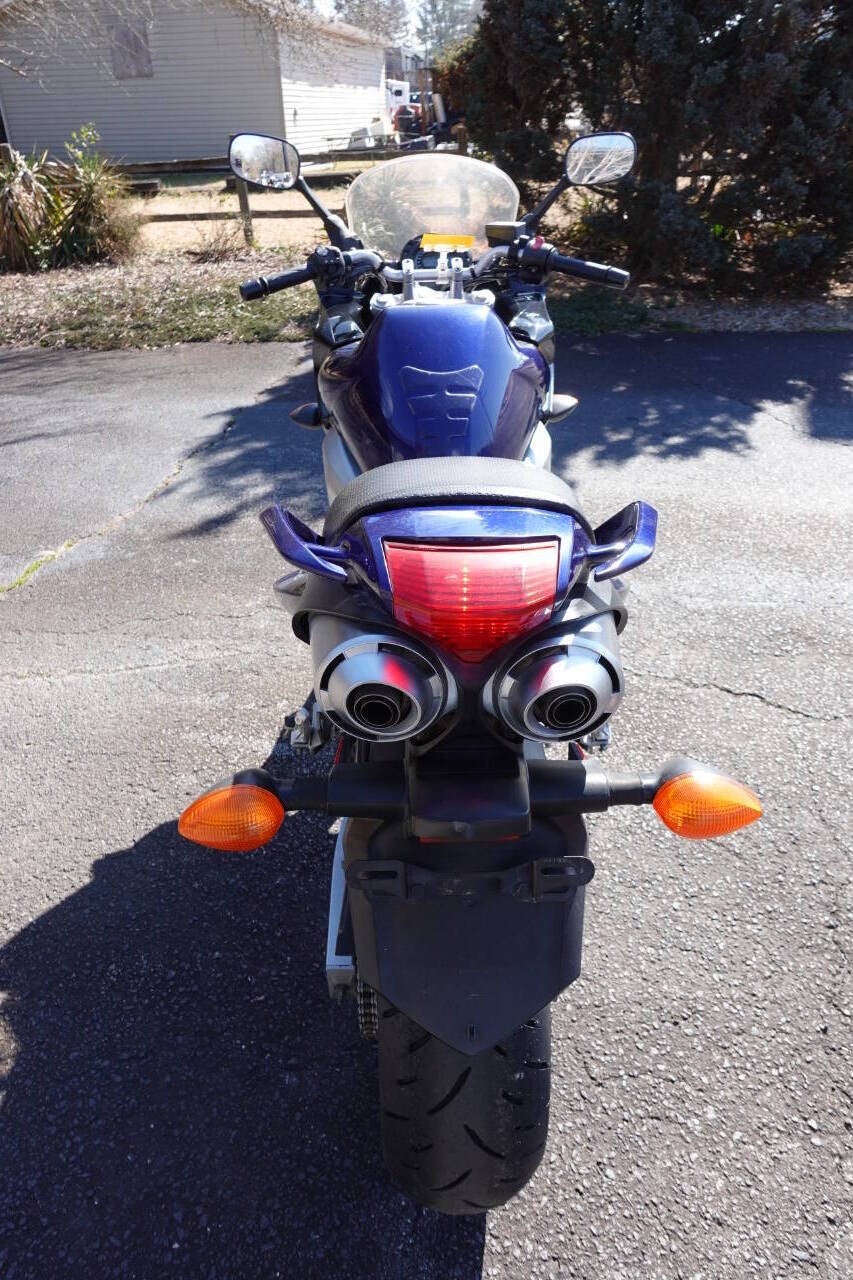
- Another sign of the times: Those under-seat exhausts were all the rage in the early 2000s. Not every OEM did a good job of this idea, and some riders roasted their backsides as a result. Photo: Blue Ridge Riders
That was only half the story. Yamaha said you could go 25,000 miles between valve clearance inspections, so maintenance costs were super-low. All you really had to do was change the oil, and these engines would last a very long time.
The rest of the machine was just as good. With a good bit of sportbike DNA in the chassis, the FZ6 handled well, but the upright riding position was far more comfortable than a Ricky Racer supercrouch. The mini-fairing was just enough to keep the wind from blasting you, and offered a bit of protection on the track as well, where some of these ended up for trackday fun.

The engine was very robust, and while you had to rev it up to make it work, it would last a very long time with only basic maintenance. Photo: Blue Ridge Riders
Here’s what Jason Roberts said of the first-generation FZ6 when he reviewed it for Motorcycle.com:
I was immediately impressed with the stability and ‘centered’ feeling of the FZ6. It’s supremely confident, and confidence-inspiring. Even on bumpy freeways in a headwind, the bike doesn’t get upset. The same held true when I reached the curvery; this bike is light, tight, and alright, stable yet totally flickable like its sporting brother. Although the high, flat handlebar bar is perfectly positioned and the fairing does a great job of deflecting the blast sans turbulence, the seat gets painful after maybe an hour, which is unfortunate for a commuter bike.
Seeing that complaint about the seat is amusing, because just about every motojourno of the ’00s said that in every review. Either just about every saddle of that era was bad, or they were being nit-picky. Anyway, reading on, here’s what he said about the engine:
The re-tweaked R6 lump is revvy (redline is 1000rpm down from the R6, at 13,500) and needs to be spun up past 7k to really rip, but good power is available in the midrange as well. In any case, it’s super smooth…although there is vibration, it’s never intrusive or annoying.
The summary at the end:
New-concept middleweight sportbike: High-performance but with an anything, anytime, anywhere attitude.So there you have it. The new FZ6 is a damn good machine, at least on first impressions – sexy, good handling, light, and reasonably comfortable for short-term work. And for the price of “around $6k” as B-rad says, it’s also a damn good deal. The line forms at your nearest Yamaha dealer, sometime around the beginning of next year.
In retrospect, he was right. Yamaha did have a winner here, but maybe didn’t sell quite as many as they should have in the States. The 2008 Financial Crisis did nothing to help sales that decade of course, but the biggest problem was that Americans were enamored with cruisers and choppers back then, and a practical all-rounder just wasn’t going to be as popular as a chromed-out barge built by a mustachioed TV huckster with accessory biceps.

The fairing was practical, and reminded many riders of the sporty R6. You could get a touring screen from the aftermarket if you wanted to do long miles. Photo: Blue Ridge Riders
But if you search the forums, you will find that those who had these bikes generally liked them a lot. Some ADVers owned them, and spoke highly, and they were certainly popular in Europe, where practical Japanese bikes have always had a good following. Many owners spoke of the same vibrations that were mentioned in the early MO review (see it here), and the fuel injection on the first-gen FZ6 had a reputation for being herky-jerky.

While EFI was standard from the get-go, ABS was not available on the earlier models. Yamaha did not introduce it until 2006. Photo: Blue Ridge Riders
Outside of stop-and-go urban traffic that was less of a problem, though, and the FZ6 could go far, far beyond city limits if you wanted. As a budget tourer, it was one of the best machines of its era. Sure, it had quirks, but it got the job done. See YouTuber @axel-moto’s take on the bike below:
This bike here
The motorcycle seen here is for sale at Blue Ridge Riders in North Carolina. It sounds like it’s ready to roll, from their ad description:
2005 Yamaha FZ6 with 16,569 miles. Fresh oil and filter good tires.

Plenty of riders put a rack on the bike and turned it into a budget-friendly sport tourer. Photo: Blue Ridge Riders
Asking price is $3,995, which might be a hair more than I’d want to pay, but as long as everything is in good shape, that’s pretty low mileage for a bike like this. It should have many more years of life left. See the ad here for more info.