
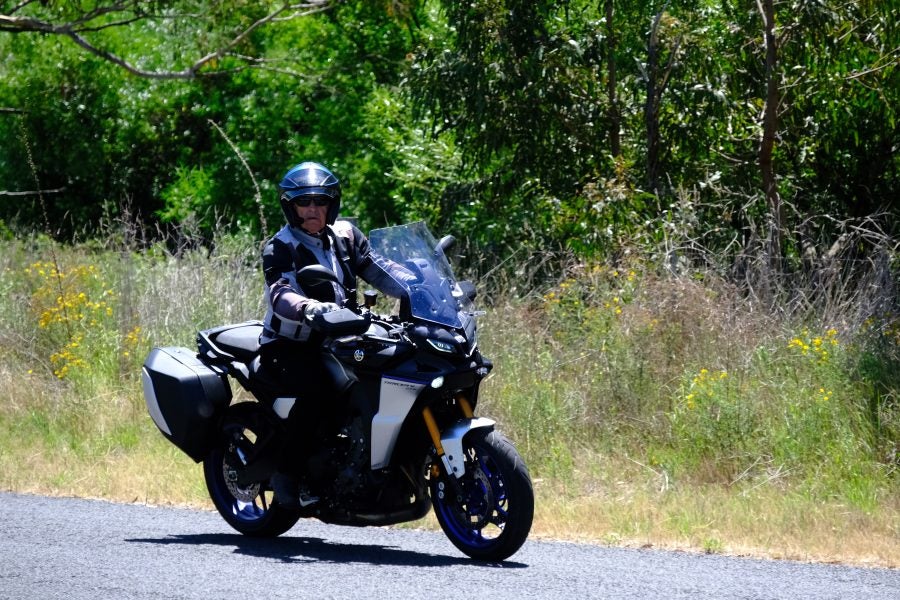
The now-discontinued Yamaha Tracer 9 GT was last overhauled in 2020 and was a very good long distance, performance motorcycle. As an all-round sports tourer it was probably the pick of the bunch with that wonderful high-torque CP3 transverse triple engine and semi-active suspension. It might “only” have displaced 890 cc but it was 59 lb and 44 lb lighter than the Multistrada and the Africa Twin respectively. It even weighed in at 55 lb lighter than the new, slimmed-down BMW R1300 GS.
Admittedly the “+” has picked up 17 lb, but it’s still significantly lighter than the other bikes. Its performance has stayed the same with power output of 117 hp and 69 lb-ft of torque, which is pretty much just right for any application. The cast aluminum frame and semi-active KYB suspension front and back have been carried over from the previous model as well, and combine to provide pleasantly intuitive handling. A couple of times I felt that the bike was a little top-heavy, but that impression was easily disposed of with the application of some throttle.
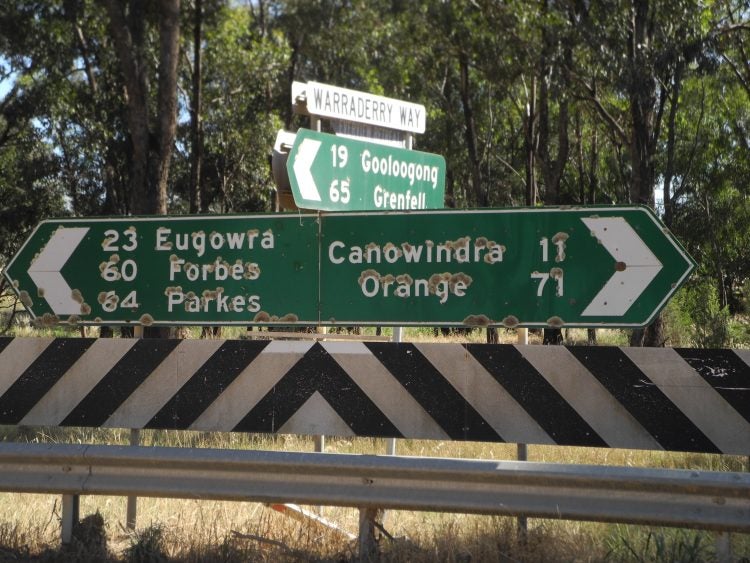
Its adaptable suspension and decent fuel range make the GT+ a good choice for tackling Australian back roads. Photo: The Bear
But I’m getting ahead of myself. Yamaha claims that it wasn’t looking to upgrade the GT by making the new model faster or more nimble but to instead improve the GT’s “level of capability and comfort significantly.” To do that, they left the perfectly satisfactory engine, bodywork and panniers alone and added the Radar Linked Unified Braking System, claimed as a world first, and adaptive cruise control, made possibly the neat radar between the headlights. Smooth new switchgear – a joystick replaces the control wheel – a larger rear disc for the new braking system and a new and remarkably capable quickshifter all add to that “capability” improvement while “comfort” is effectively upgraded with a new seat design. Everything (okay, except the seat) is pulled together with a new seven-inch TFT display.
Whether you believe that the electronics packages making their appearance on new bikes provide a genuine advantage, or take the cynical view that they’re primarily there to justify price increases, the fact is that they’re here to stay. It will no doubt take a while before some of the innovations make their way down to lower-priced bikes, but they ain’t goin’ away. With that in mind, it’s fairly obvious that Yamaha has produced a bike for the times; still an all-round sports tourer but brought completely up to date.
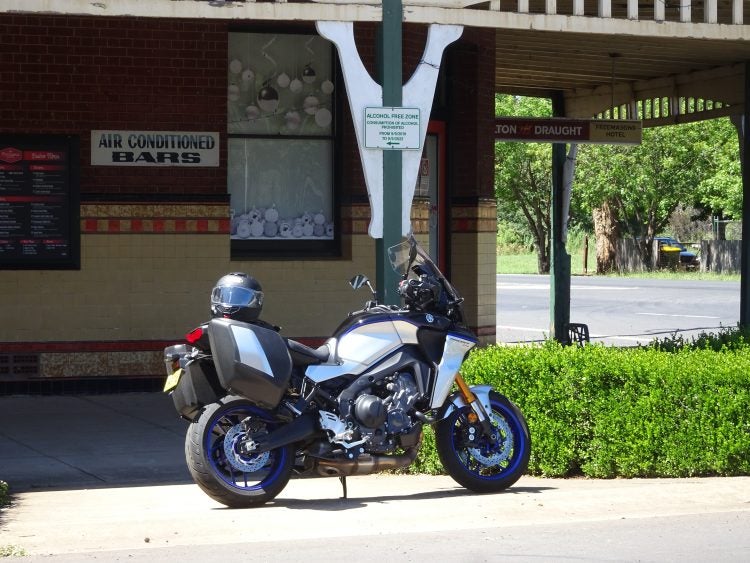
Parked outside the pub while we had lunch the GT+ attracted no local interest. Photo: The Bear
I think the Tracer 9 GT+ might foreshadow a whole bunch of optioned-up but light sports tourer/all–rounders with relatively small engines from all sorts of marques. For Yamaha, the Tracer 9 will supersede the FJR1300 to become the company’s largest sports touring bike, and it’s an interesting game trying to guess what will happen with other manufacturers. The owner of my local bike shop tells me that demand for sub-litre bikes is much stronger than for the bigger machines.
It looks like I’m ahead of the curve with the bikes in my garage – a 750, an 850 and a 900. As far as capacity goes, anyway; none of them have much in the way of electronics.
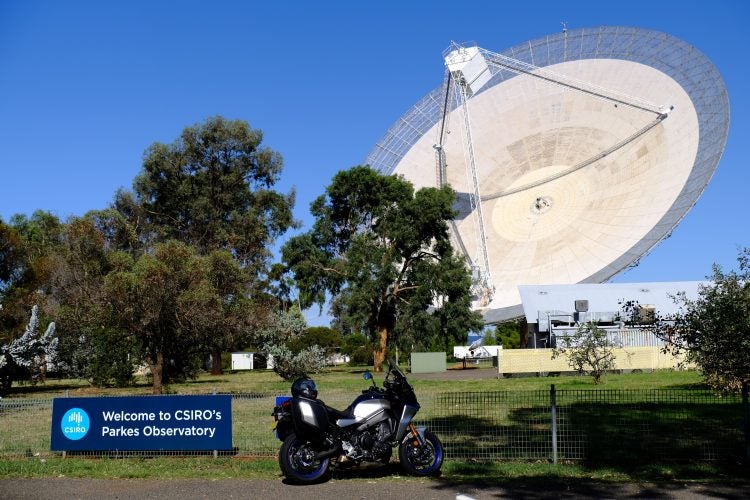
Fun Fact: NASA copied the design of the CSIRO’s Parkes dish for its own radio telescopes. Photo: The Bear
We put a thousand kilometers on the Tracer 9 GT+ kindly provided by Yamaha Motors Australia over two days, and except for the ambient temperature which rose to 42 degrees Celsius all went well. The temperature only affected me, not the bike, although we slipped around a bit on tar snakes. Recovery was easy with the Bridgestone T32 tires. With a relaxed and more or less upright riding position and a comfortable angle for my hips, knees and ankles (this becomes really important as you pass three and a half score years) the bike was a pleasure to ride. The seat is comfortable, as advertised, and the small screen provided relief from the hot breeze. It supposedly has multiple levels but I just clicked it to its top setting where it directed air flow to the top of my helmet.
In the past I have not been a fan of quickshifters. While the third-generation, two-way unit on this bike allows you to downshift with the throttle still open, meaning you can kick back a few gears to overtake without closing the throttle, I’m still not really convinced. As Abraham Lincoln allegedly wrote, “People who like this sort of thing will find this the sort of thing they like”, and fair enough.
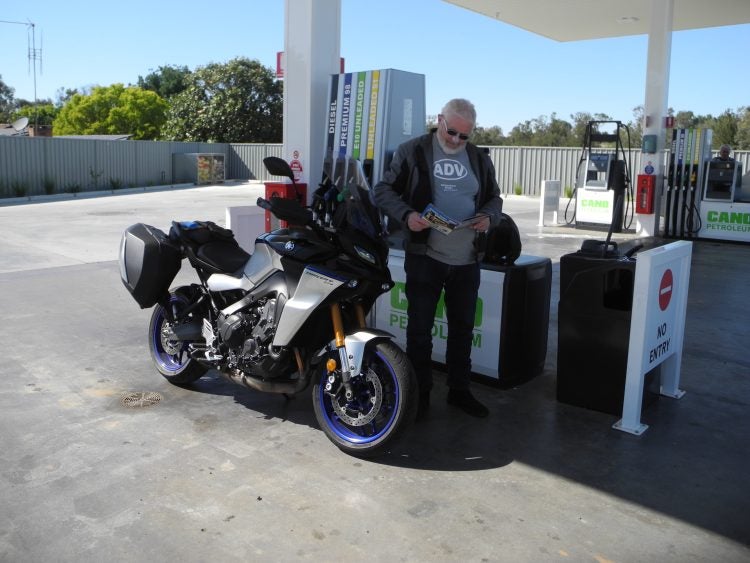
The 350 km-plus range means you only fill the GT9+ a couple of times a day so you have time to check out local attractions. Photo: The Bear
I do find it impressive the way the Adaptive Cruise Control (ACC) with its four adjustable presets and the radar-linked Unified Brake System (UBS) automatically control cruising speed, deceleration and acceleration to match that of the vehicle in front of you to maintain a constant following distance. As well, the system adds more braking force if it determines that you’re not braking hard enough to maintain the set distance. Note, though, that is not a collision-avoidance system; you already need to be braking for it to assist. The bike utilizes data from the MWR and its six-axis Inertial Measurement Unit (IMU) to determine the braking input while simultaneously adjusting front/rear braking bias and front/rear suspension damping force.
Despite trying to stick to the ride, I keep slipping into descriptions of the bike’s features – to the point where I am now out of space. There is more than I have covered, and I’ll have to leave you with this: if you’re keen on electronic aids, the Tracer 9 GT + will satisfy your wishes. On top of that, it goes and handles very well, provides a range of more than 350 km (about 220 miles) and costs A$27,599 ($16,499 MSRP in the US). It’s well worth it.